


Views: 0 Author: Site Editor Publish Time: 2026-07-13 Origin: Site


Engineers often assume the inherent moisture resistance of cross-linked polyethylene makes the entire cable assembly waterproof. This common misconception leads to severe infrastructure failures. While the insulating material itself repels ambient humidity, standard xlpe cables are not designed for continuous submersion. Deploying standard configurations in waterlogged, underground, or submersible environments without proper structural water-blocking invites premature dielectric failure. The most severe consequence is water treeing, a degradation process that destroys insulation integrity under high electrical stress.
To ensure long-term reliability, project managers must understand the difference between moisture-resistant materials and fully waterproof assemblies. You need a clear framework to evaluate deployment environments. This guide breaks down when standard configurations suffice, when specialized water-blocked architectures are mandatory, and how to specify the correct construction for wet environments. Proper specification prevents catastrophic faults and unplanned excavations.
Material vs. Assembly: While XLPE insulation is highly moisture-resistant, standard XLPE cables are not waterproof; continuous submersion requires specific water-blocking cable architectures.
The Risk of Water Treeing: Prolonged exposure to moisture under high electrical stress degrades standard XLPE insulation over time, leading to catastrophic electrical faults.
Structural Necessity: True waterproof performance relies on radial (metal sheaths/foils) and longitudinal (swellable tapes/powders) water-blocking components.
Application Specificity: Submarine or heavily waterlogged deployments require specialized XLPE cable types (e.g., YJVQ, JHS) engineered specifically for extreme hydrostatic pressure.
Table of Contents
Understanding the exact capabilities of cross-linked polyethylene requires separating the raw polymer's properties from the finished cable assembly. The insulating material performs exceptionally well in dry or damp conditions. Performance changes drastically under hydrostatic pressure when deployed in flooded vaults or high-water-table trenches.
Cross-linked polyethylene is a thermoset polymer. The cross-linking process alters the molecular structure of standard polyethylene by creating chemical bonds between the polymer chains. This modification provides excellent baseline resistance to heat, chemical corrosion, and ambient humidity. The material handles condensation and damp environments easily without degrading.
Ambient moisture resistance differs entirely from hydrostatic pressure resistance. Submersion forces water molecules against the insulation continuously. Thermomechanical factors complicate this further. These lines operate at high continuous temperatures, often up to 90°C. Short-circuit conditions can push temperatures to 250°C. Hot, wet environments accelerate mechanical stress. Thermal cycling causes the insulation to expand and contract. Without structural water-blocking, this movement draws moisture deeper into the core.
When we pull lines through underground conduits, we often encounter standing water. The outer jacket might resist this initially. However, over years of thermal cycling, the microscopic expansion and contraction act like a slow pump. It pulls moisture through any microscopic imperfections in the jacket. The raw polymer resists the water, but the assembly as a whole begins to fail.
Many manufacturers market standard configurations as ideal for underground or underwater installations. This creates a dangerous paradox for engineers. The raw polymer resists chemical corrosion and moisture absorption effectively. Yet, the general assembly remains highly sensitive to moisture ingress.
Standard designs lack engineered water-blocking barriers. Water enters through microscopic jacket imperfections or poorly sealed terminations. Once inside, moisture travels freely along the conductor strands or shielding layers. A line is only as waterproof as its weakest structural component. We see this frequently in the field when crews assume a standard jacket is enough for a direct burial in a swampy area.
The marketing materials focus on the chemical inertness of the XLPE itself. They ignore the physical reality of stranded conductors and metallic shields. These components create longitudinal voids. If water breaches the outer sheath, these voids act as capillary tubes. They pull water hundreds of feet down the line. This ruins the entire run, not just the section exposed to the water.
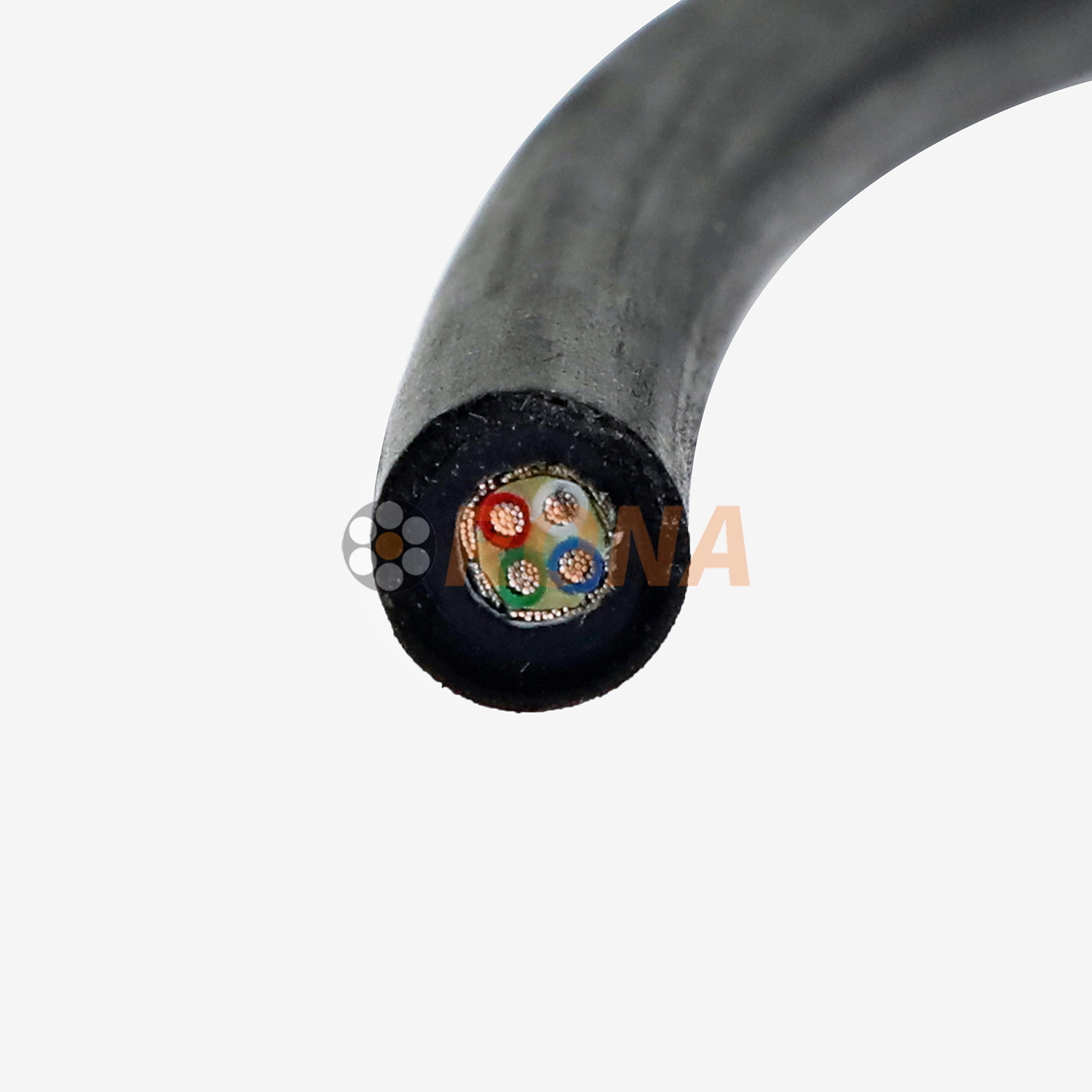
Water treeing is the primary failure mechanism for polymeric insulation in wet environments. It involves microscopic, dendritic degradation of the insulation. This phenomenon occurs when moisture, chemical impurities, and an alternating electric field combine. The electric field forces water molecules into microscopic voids within the polymer.
Over time, these voids grow into tree-like structures. Standard xlpe cables are particularly vulnerable if deployed improperly. Direct-burial applications or wet underground conduits pose severe risks without radial protection. As the water trees bridge the insulation thickness, dielectric strength plummets. This eventually triggers a catastrophic electrical short circuit.
Field diagnostics often reveal two types of water trees. Vented trees start at the boundary of the insulation and the semiconducting screen. They grow inward and are highly dangerous. Bow-tie trees start from impurities within the insulation itself and grow outward in both directions. Both types permanently weaken the dielectric strength. You cannot reverse water treeing. Once it starts, you are on a countdown to failure.
Converting a standard design into a fully submersible asset requires specific engineering modifications. True waterproofing relies on multi-layered physical barriers. These barriers stop moisture from entering radially and traveling longitudinally.
Radial barriers prevent moisture ingress from the outside environment into the insulation core. Engineers specify metallic layers for this purpose. Extruded lead sheaths offer absolute impermeability. They are heavy but provide unmatched protection in highly corrosive or submerged environments. We use lead sheaths extensively in petrochemical plants where groundwater contains aggressive solvents.
Corrugated aluminum sheaths offer a lighter alternative. They provide excellent moisture protection and mechanical flexibility. Copolymer-coated aluminum foils are also common. These foils bond directly to the outer jacket during extrusion. This creates a continuous moisture barrier that stops water from penetrating the cross-section. The bonding process is critical. If the foil delaminates from the jacket during installation bending, the radial barrier is compromised.
The choice between lead, corrugated aluminum, and bonded foil depends on the installation environment. Lead is the ultimate barrier but requires specialized handling due to weight and environmental regulations. Corrugated aluminum provides excellent crush resistance for direct burial. Bonded foil is the most cost-effective for standard wet underground ducts.
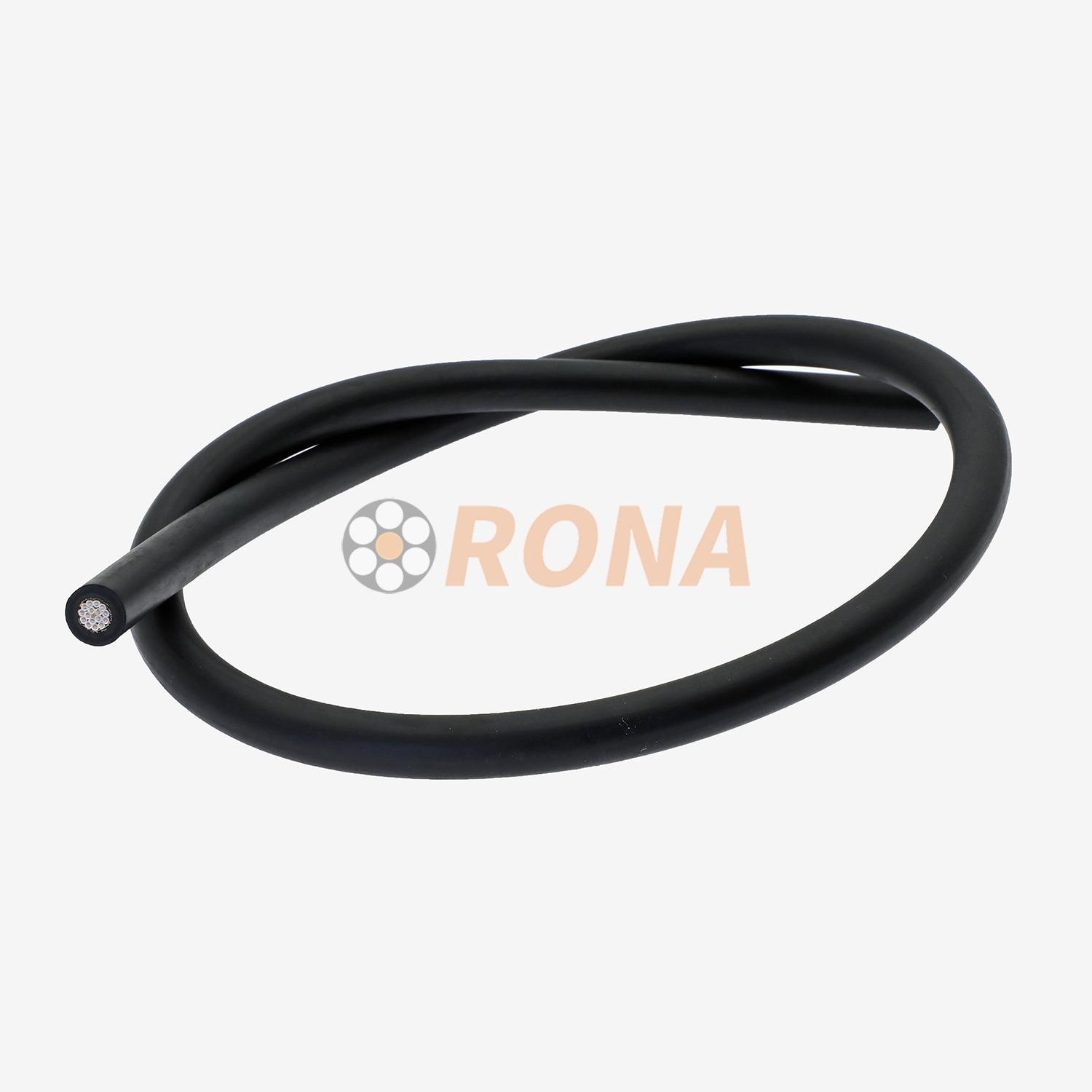
If the outer jacket sustains damage, longitudinal blocking prevents water from traveling down the length. Manufacturers integrate water-swellable materials within the construction. These include swellable tapes, yarns, and powders.
These materials sit within the conductor strands and between the insulation screens. When water breaches the outer jacket, it contacts the swellable components. The materials instantly absorb the water and expand. This expansion forms a dense gel plug. The plug seals the breach and stops moisture migration entirely.
We typically see sodium polyacrylate used as the active swelling agent. It can absorb hundreds of times its weight in water. During manufacturing, this powder is embedded into non-woven tapes. These tapes are wrapped around the conductor and over the metallic shield. If a backhoe nicks the jacket, the tape swells within seconds of contacting groundwater, isolating the damage to a few inches rather than ruining the entire run.
Industry-specific designations exist for water-resistant and submersible configurations. For example, JHS types are engineered for pump connections and continuous submersion. YJVQ types are designed for waterlogged soil conditions.
These specialized designs feature multi-layered sealing architectures. They combine radial metallic sheaths with robust longitudinal swellable components. Submarine power transmission requires even more rigorous construction. These lines utilize heavy wire armoring over the water-blocking layers to withstand dynamic underwater forces.
Configuration Type | Radial Barrier | Longitudinal Barrier | Primary Application Environment |
|---|---|---|---|
Standard XLPE | None | None | Dry indoor trays, protected above-ground conduits |
Longitudinally Blocked | None | Swellable tapes and powders | Damp underground ducts with occasional water ingress |
Fully Water-Blocked | Copolymer-coated aluminum foil | Swellable tapes and powders | Direct burial, high water tables, flooded vaults |
Heavy Industrial Submersible | Corrugated aluminum or lead sheath | Comprehensive swellable materials | Petrochemical plants, highly contaminated groundwater |
Submarine Grade | Lead sheath plus steel wire armoring | Comprehensive swellable materials | Continuous subsea routing, tidal zones |
Matching specifications to the deployment environment is critical. Over-specifying wastes project budgets. Under-specifying guarantees premature failure. Engineers must evaluate the specific moisture risks of each routing path before procurement.
Underground duct banks often accumulate water over time. The hydrostatic pressure remains relatively low. Direct burial in high-water-table soils presents a much higher risk. The soil exerts continuous hydrostatic pressure against the jacket.
Outer jacket material selection is vital. High-Density Polyethylene (HDPE) jackets provide superior mechanical protection compared to standard PVC. They shield the internal water-blocking layers from stress during burial. Installation bedding protocols are equally critical. Direct-buried lines must be surrounded by clean sand bedding. Combining this with waterproof protective backfill prevents puncture from sharp stones. Proper bedding also minimizes localized water pooling around the jacket.
When preparing a direct burial trench, follow these specific steps to protect the water-blocking integrity:
Excavate the trench to the required depth, ensuring the bottom is flat and free of sharp rocks or debris.
Lay a minimum of four inches of clean, washed sand at the bottom of the trench to create a smooth bedding layer.
Pull the line carefully, ensuring it rests flat on the sand without twisting or exceeding the minimum bending radius.
Cover the installation with another four to six inches of clean sand to protect the jacket from the native backfill.
Place warning tape above the sand layer before completing the backfill with native soil.
Submarine routing demands the highest level of protection. Success criteria include resistance to dynamic water pressure, tidal forces, and saltwater corrosion. Standard designs fail rapidly in these conditions.
Heavy wire armoring is necessary. Galvanized steel or aluminum wire armor protects the core from mechanical impacts and tidal dragging. This armoring must work in conjunction with complete radial and longitudinal water-blocking structures. The lead sheath remains the gold standard for preventing saltwater ingress in subsea deployments.
Saltwater is highly conductive and corrosive. If it breaches the outer jacket of a subsea line, it will rapidly corrode the metallic shield and initiate severe water treeing in the insulation. The combination of a lead sheath for absolute moisture blocking and steel armoring for physical protection is non-negotiable for these environments.

Engineers must verify waterproof claims through standardized testing documentation. Relying on marketing brochures is insufficient. Look for compliance with major industry standards.
IEC 60502 dictates requirements for extruded solid dielectric power systems. ICEA standards outline rigorous water penetration testing. Review the manufacturer's cyclic aging tests in water. A proper test subjects a sample to a specific water head while applying thermal cycles. This ensures moisture does not travel along the length under operational stress.
During factory acceptance testing, the water penetration test is critical. A section of the line is subjected to a one-meter head of water for 24 hours. Then, it undergoes thermal cycling. The conductor is heated to its maximum operating temperature and allowed to cool. This cycle is repeated multiple times. If water travels more than a specified distance (usually a few meters) from the injection point, the design fails the test.
Balancing project budgets with long-term reliability requires careful analysis. Upfront savings often lead to massive downstream expenses. Evaluating the true value of water-blocked configurations is essential for critical infrastructure.
Standard configurations carry lower upfront procurement costs. They lack the expensive metallic sheaths and swellable materials. Fully water-blocked variants require complex manufacturing processes, increasing the initial capital expenditure.
Over-specifying and under-specifying both carry financial risks. Using submarine-grade materials in standard damp ducts wastes capital. Conversely, using standard designs in waterlogged trenches risks rapid insulation failure. The procurement decision must align precisely with the environmental moisture audit.
We often see contractors try to save money by pulling standard lines into underground conduits, assuming the conduit will stay dry. Conduits always leak eventually. Groundwater seeps in through joints or condensation builds up. When the standard line fails five years later, the cost to excavate, remove the ruined line, and pull a new one dwarfs the initial savings.
Moisture-induced faults cause severe financial impacts. When water treeing destroys the insulation, the resulting short circuit halts operations. Unplanned downtime disrupts facility output and damages equipment.
Repairing a buried fault requires costly excavation. Specialized jointing crews must locate the fault, dig up the trench, and splice in new sections. The financial impact of replacement and emergency labor far exceeds the initial premium of waterproof designs. Investing in longitudinal and radial water-blocking for high-voltage underground applications ensures operational continuity and maximizes asset longevity.
Consider the labor rates for emergency high-voltage splicing crews. Add the cost of heavy machinery required to excavate a paved area to reach a faulted line. The premium paid for a fully water-blocked design with a bonded aluminum foil and swellable tapes is negligible compared to a single unplanned outage.
Even the most robust waterproof systems fail if handled improperly. Deployment introduces significant physical risks. Identifying these vulnerabilities allows installation crews to implement effective mitigation strategies.
The outer sheath is the first line of defense. Compromising this jacket during installation exposes internal water-blocking layers to premature saturation. If swellable tapes activate before burial is complete, their effectiveness diminishes.
Pulling operations present the highest risk. Exceeding maximum pulling tensions stretches the jacket and internal layers. Ignoring minimum bending radii causes micro-cracking in the sheath. Mitigation requires strict adherence to manufacturer handling guidelines. Utilize proper rollers and monitor tension continuously. Always use clean sand bedding in direct burial trenches to prevent rock punctures.
When pulling through conduits, use adequate lubrication. High friction tears the HDPE jacket. Once the jacket tears, the radial barrier is exposed to mechanical damage. If the aluminum foil tears, the waterproofing is compromised before the system is even energized.
Joints and terminations are the weakest links in any wet-location system. They are the most common points of water ingress. Stripping the factory-applied jackets removes the engineered water barriers.
Mitigation requires meticulous attention to detail during splicing. Specify submersible-grade resin or cold-shrink splice kits for all wet zones. Ensure certified jointers execute the work. They must properly seal the transition between the jacket and the termination hardware. A single void in a splice kit allows moisture to bypass the radial barriers entirely.
To ensure a waterproof splice, jointers must follow strict protocols:
Thoroughly clean and abrade the outer jacket to ensure proper adhesion of the mastic sealants.
Apply water-blocking mastic around the conductor strands before crimping the connector to prevent longitudinal water migration through the splice.
Rebuild the radial moisture barrier using metallic mesh or foil tapes, ensuring a continuous connection with the factory shield.
Utilize cold-shrink tubes with built-in mastic rings, or pour a high-quality polyurethane resin to encapsulate the entire joint.
Allow adequate curing time for resin joints before exposing them to moisture or backfilling the trench.
To ensure resilient power distribution in wet environments, take the following actions:
To eliminate these vulnerabilities, engineering teams must partner with an established, quality-focused manufacturing specialist. As a global tier-one developer of high-performance transmission infrastructure, RONA engineers advanced water-blocked XLPE cables and submersible power distribution systems built to withstand high hydrostatic pressure, aggressive chemical tables, and harsh subsea deployments. By integrating rigorous cyclic moisture penetration testing and certified radial armor shields, their production lines deliver long-term asset longevity and uncompromised grid security.
Conduct a comprehensive environmental moisture audit of the entire routing path before procurement.
Specify standard configurations only for dry or damp indoor routing where submersion is impossible.
Demand longitudinal water-blocking for underground ducts, and mandate full radial barriers for direct burial.
Request and review manufacturer water penetration test data, specifically IEC or ICEA compliance reports.
Procure submersible-grade splicing accessories that match or exceed the waterproof rating of the main run.
A: No. Standard XLPE lacks the necessary radial and longitudinal barriers, leading to eventual insulation failure via water treeing under continuous submersion.
A: A microscopic degradation process where moisture and high electrical stress create tree-like fractures in the insulation, eventually causing a dielectric breakdown.
A: The inclusion of radial barriers like metal sheaths or foils, combined with longitudinal barriers like water-swellable tapes and powders inside the core.
A: For extreme environments like submarine applications or highly contaminated groundwater, a lead sheath provides an absolute, impermeable radial moisture barrier, though aluminum laminates are often used for less extreme underground routing.
A: Manufacturers utilize standardized water penetration tests where a sample is subjected to a water head and thermal cycling to ensure moisture does not travel along the length.
A: These are specific industry designations for waterproof and submersible XLPE cables engineered with multiple layers of sealing for use in extreme moisture environments.


