Views: 0 Author: Site Editor Publish Time: 2026-09-16 Origin: Site
An industrial flexible cable does much more than transmit electricity or signals. In cranes, robots, automated machines, ports, mining equipment, and mobile machinery, the cable itself becomes part of the moving system.
It may bend thousands of times, twist around a robot joint, travel inside a drag chain, or wind and unwind from a large drum. At the same time, it may be exposed to oil, water, coolants, chemicals, heat, cold, ultraviolet radiation, abrasion, and mechanical tension.
This is why cable selection should begin with the machine’s movement and working environment rather than price or conductor size alone.
Table of Contents
Industrial flexible cables are designed for repeated movement. They usually use fine-stranded conductors, flexible insulation, carefully arranged cores, suitable fillers, and a protective outer jacket.
The internal construction determines how the cable behaves during movement. A cable for a drag chain is designed for repeated linear bending. A crane reeling cable must withstand winding, unwinding, pulling force, and repeated flexing. A robot cable may also need to resist torsion.
Use the following table to match the cable type with the actual equipment movement.
Movement Profile | Typical Equipment | Main Cable Requirement |
|---|---|---|
Drag chain bending | CNC machines, automation systems, production lines | Repeated controlled bending |
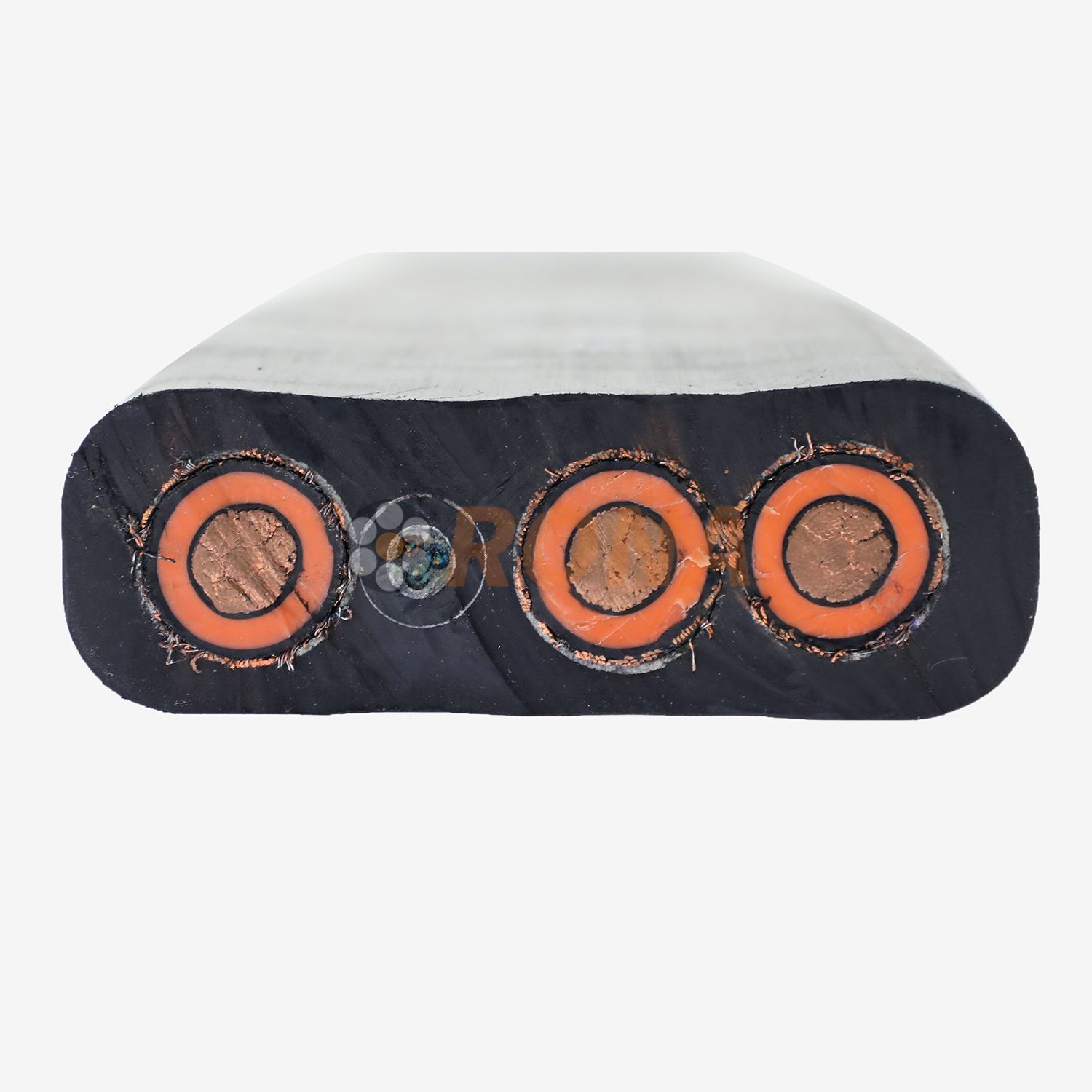
Reeling | Cranes, spreaders, ship loaders, mobile machinery | Bending, winding, and tensile strength |
Torsion | Robotic arms, welding robots, assembly systems | Bending combined with twisting |
Festoon movement | Overhead cranes and handling systems | Controlled loops and mechanical support |
Trailing movement | Mobile machinery and construction equipment | Abrasion resistance and strain relief |
CNC machines, production lines, and robotic seventh-axis systems often route cables through drag chains. The cable must match the chain’s internal space, travel distance, speed, acceleration, and bending radius.
RONA’s HF Drag Chain Cable range includes PVC- and PUR-sheathed cables for power, control, servo, and signal transmission.
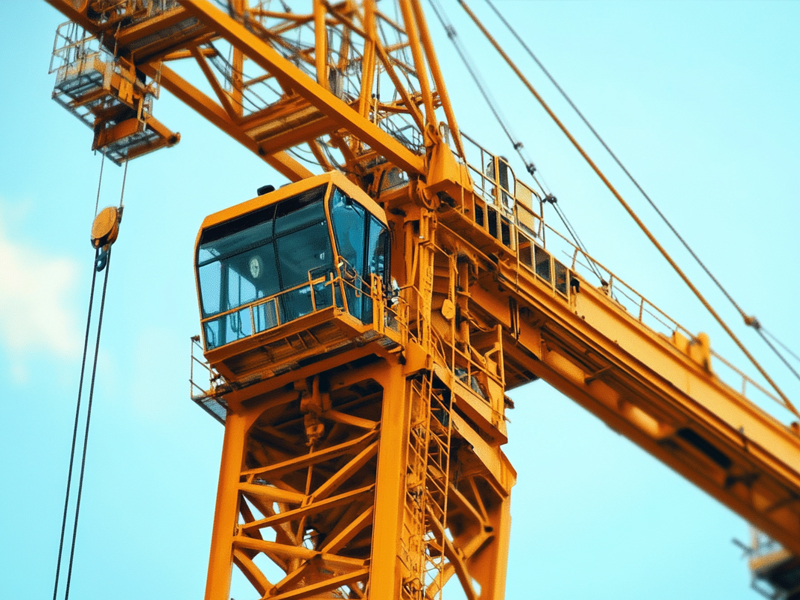
Reeling cables used on cranes, port equipment, spreaders, and ship-loading machinery must withstand repeated winding and unwinding on a cable drum. Selection should consider the complete reeling system, including drum diameter, reeling speed, travel distance, cable tension, winding direction, single- or multi-layer winding, and whether the cable is installed vertically, horizontally, or in a combined configuration.
Robot cables must be selected according to the maximum torsion angle, rotation direction, moving length, speed, and expected operating cycles.
Festoon cables, meanwhile, move in supported loops. Their weight, loop length, support structure, and strain relief all affect service life. A conventional flexible cable should not automatically be used for either application.
The minimum bending radius is normally specified as a multiple of the cable’s outside diameter, and the allowable radius for fixed installation may differ from that required for continuous movement. If a cable is bent to a radius smaller than its specified limit, the inner side becomes compressed while the outer side is stretched. Repeated over-bending can lead to conductor fatigue, insulation damage, core displacement, shielding failure, jacket cracking, and electrical faults. Inside a drag chain, cables should be positioned so they can move freely without excessive tension, twisting, or uncontrolled slack. The cable ends should be secured outside the moving section to keep pulling forces away from the flexing area.
Cable life depends on more than the number of bending cycles stated in a catalogue. Actual service life is influenced by:
Bending radius
Movement speed
Acceleration
Travel distance
Cable weight
Operating temperature
Installation method
Drag chain or drum design
For example, RONA specifies a moving bending radius of 7.5 times the outer diameter for its HFMVP 4G25 shielded PVC drag chain cable. The listed speed and acceleration values apply to that specific product and should not be generalized to every flexible cable.
The jacket protects the cable from external damage. Common materials include PVC, PUR, rubber, and silicone.
Jacket | Strengths | Suitable Conditions |
|---|---|---|
PVC | Cost-effective and mechanically durable | Indoor automation and moderate movement |
PUR | Strong abrasion, oil, and chemical resistance | Robots, machining, and high-speed drag chains |
Rubber | Flexible and rugged | Cranes, ports, mining, and mobile equipment |
Silicone | Flexible at elevated temperatures | Furnaces and high-temperature production lines |
PUR is often selected for dynamic movement and oily environments. PVC can be suitable for controlled indoor installations. Rubber is commonly used in demanding outdoor applications, while silicone is selected for high-temperature conditions.
The exact compound must still be verified. Two cables with the same general jacket material may have different resistance to oil, chemicals, UV radiation, saltwater, flame, or low temperatures.
Flexibility alone does not guarantee suitable electrical performance. Before ordering, confirm the operating voltage, maximum current, conductor cross-section, number of cores, grounding requirements, temperature-related derating, installation method, and applicable electrical standards. These factors must be matched to the equipment’s actual load and operating environment to ensure safe, stable, and reliable cable performance.
Industrial equipment may require separate power, control, servo, signal, communication, or data cables. Some applications use composite cables combining several functions.
Shielding may be necessary near variable-frequency drives, servo motors, welding equipment, and industrial networks. Without suitable shielding, systems may experience communication errors, sensor interference, unstable motor feedback, or control faults.
Shielding performance also depends on correct termination and grounding. A shielded cable cannot solve interference problems if the installation method is incorrect.
The operating environment should be assessed for:
Heat and cold
Oil, coolant, fuel, or solvents
Water, humidity, or saltwater
UV and ozone
Abrasion, impact, and crushing
Flame-retardant requirements
Offshore, mining, or subsea conditions
A water-resistant cable is not necessarily suitable for continuous immersion. Oil resistance does not automatically mean resistance to aggressive chemicals.
RONA offers flexible cable solutions for watertight, offshore, subsea, PUR, rubber, silicone, and other industrial applications.
Before requesting a quotation, provide the supplier with:
Information | Example Requirement |
|---|---|
Cable function | Power, control, servo, signal, data, fiber, or hybrid |
Movement | Drag chain, reeling, torsion, festoon, or trailing |
Motion data | Radius, speed, acceleration, travel, and cycles |
Electrical data | Voltage, current, cores, conductor size, and grounding |
Environment | Oil, water, chemicals, UV, heat, cold, or abrasion |
Installation | Drum, drag chain, strain relief, connectors, and available space |
Compliance | Market, equipment standard, certificates, and test reports |
Selecting by price alone can increase maintenance and downtime costs. However, the most expensive cable is not automatically the best option. The right choice is the cable whose construction matches the actual operating conditions.
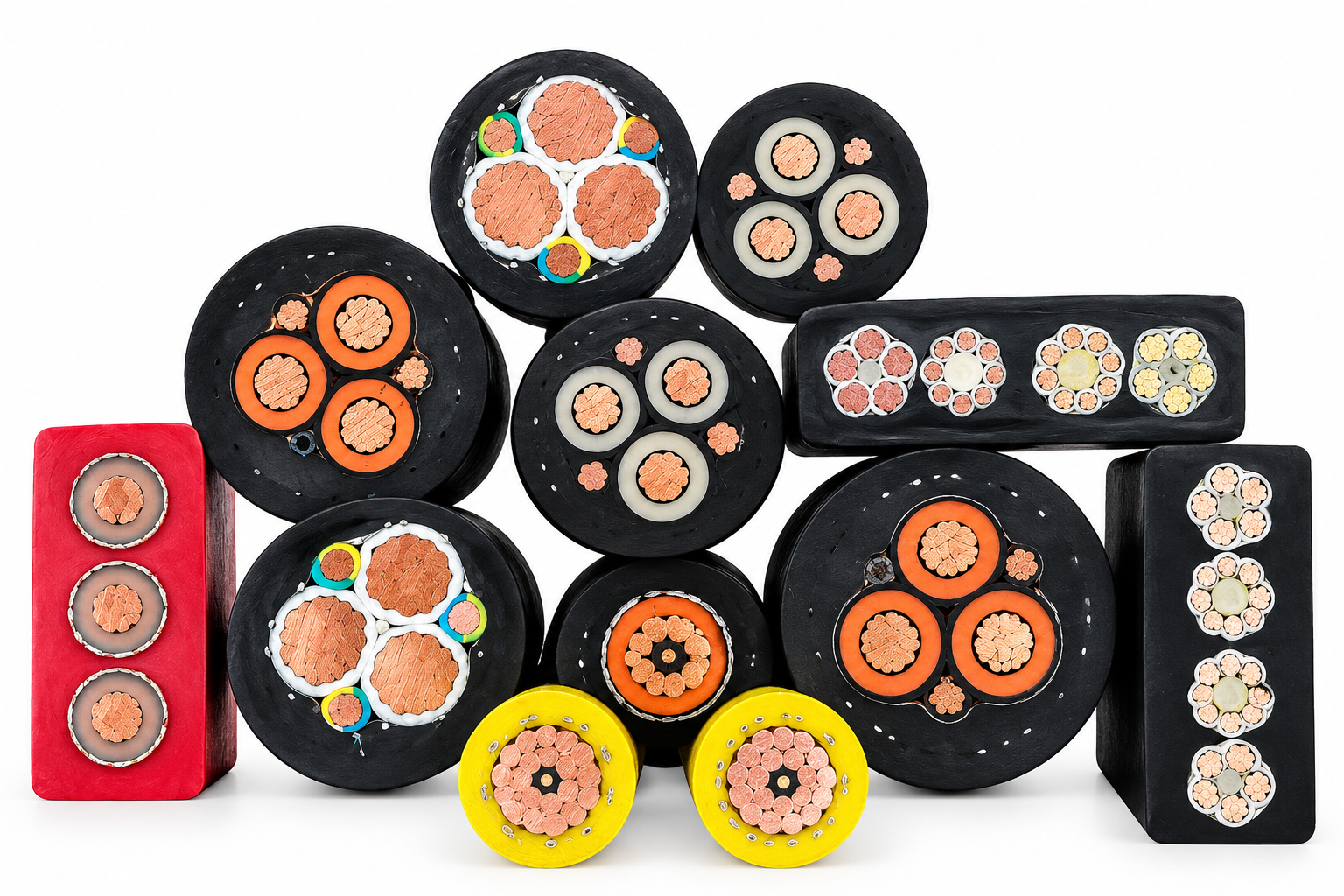
RONA provides flexible cable solutions for drag chains, cranes, robots, automation systems, ports, marine environments, industrial communication, and high-temperature applications.
Its product range covers different movement patterns, voltage ratings, conductor structures, jacket materials, and environmental requirements.
Buyers can review RONA’s industrial flexible cable range and provide complete machine conditions for a more accurate recommendation.
Not necessarily. Drag chain cables require suitable conductor strands, insulation, core arrangement, jacket material, and bending performance.
There is no universal best material. PUR is suitable for abrasion and oil, rubber is suitable for rugged outdoor use, PVC is practical for many indoor applications, and silicone performs well at elevated temperatures.
Shielding is commonly considered for servo systems, variable-frequency drives, sensitive sensors, and industrial communication systems.
There is no single specification. Movement type, bending radius, electrical load, environment, jacket material, and installation method must be evaluated together.
Choosing the right industrial flexible cable starts with the movement profile. Determine whether the cable will bend, twist, reel, hang, trail, or operate inside a drag chain.
Then confirm the mechanical construction, bending radius, speed, acceleration, jacket material, electrical rating, shielding, environmental resistance, documentation, and installation conditions.
RONA supplies flexible cable solutions for heavy-duty equipment including cranes, robots, automated machinery, ports, mining equipment, marine systems, and industrial communication.
Providing complete operating conditions before ordering helps ensure reliable performance, longer service life, and lower maintenance risk.