

Have you ever wondered what makes certain cables stand out in harsh environments? EPR cables, or Ethylene Propylene Rubber cables, are crucial in both electrical engineering and consumer technology.
In this article, we’ll explore the definition and significance of EPR cables. You’ll learn about their unique properties and why they are essential in today’s applications.
Ethylene Propylene Rubber (EPR) is a synthetic elastomer widely used as insulation in electrical cables, especially where installers and equipment need a cable that stays flexible, tough, and electrically reliable over time. Chemically, EPR is built from ethylene and propylene units, which form a rubbery polymer backbone. This structure is a big reason EPR-type insulation can remain pliable across a broad temperature range and tolerate mechanical movement better than many rigid plastics.
In practical engineering and purchasing language, it’s also common to see “EPR cables” referring to insulation compounds that are formulated as EPDM. EPDM (Ethylene Propylene Diene Monomer) is widely regarded as an important branch within the broader EPR family. By incorporating a small amount of diene, EPDM compounds can achieve more efficient and stable crosslinking during curing. In application terms (without getting overly chemical), this typically translates into improved heat-aging resistance, ozone resistance, and weatherability, which is why EPDM-based insulation is frequently selected for outdoor installations and heavy-duty industrial environments.
Chemical Composition (Typical EPR/EPDM Cable Insulation):
Ethylene: Supports elasticity and flexibility, helping the insulation stay supple during bending and handling.
Propylene: Improves thermal stability and contributes to chemical resistance in demanding environments.
Diene (in EPDM formulations): Enables stronger crosslinking and helps enhance long-term resistance to aging, ozone, and environmental exposure.
Why this composition matters in cable insulation:
It supports consistent electrical insulation performance under mechanical stress (movement, vibration, repeated bending).
It helps the cable maintain performance in hot, humid, or outdoor conditions where ozone and weathering can degrade other materials.
It contributes to service life and reliability, reducing insulation cracking and premature failures in harsh-duty applications.
When comparing EPDM (often referred to in industry as EPR-type insulation) with XLPE, the key differences usually come down to installation flexibility, environmental aging behavior, and typical application preferences rather than a simple “which voltage is higher” rule.
| Feature | EPDM (EPR) Cable | XLPE Cable |
|---|---|---|
| Flexibility | Typically highly flexible; performs well in bending and movement | Typically less flexible; more rigid feel |
| Thermal rating (typical) | Commonly rated around 90°C continuous (varies by standard and design) | Commonly rated around 90°C continuous (varies by standard and design) |
| Water treeing resistance | Often stronger resistance in wet service conditions (design-dependent) | Moderate; performance varies by compound and construction |
| Installation / bending radius | Generally more installer-friendly, especially in tight routing, frequent flexing, or mobile equipment | Generally better for fixed installations where tight bends are less critical |
| Typical use cases | Frequently chosen for industrial duty, wet/harsh environments, marine/mining, and applications needing flexibility | Frequently chosen for power distribution and many fixed-install MV/HV cable designs (application-dependent) |
In practice: if your cable will see frequent bending, mobile power supply use, marine/mining dragging, EPDM (EPR) insulation is often a better fit. In many mobile and abrasion-prone scenarios, cloth-braided EPDM cables are also commonly used (only include this line if it matches your actual product construction).
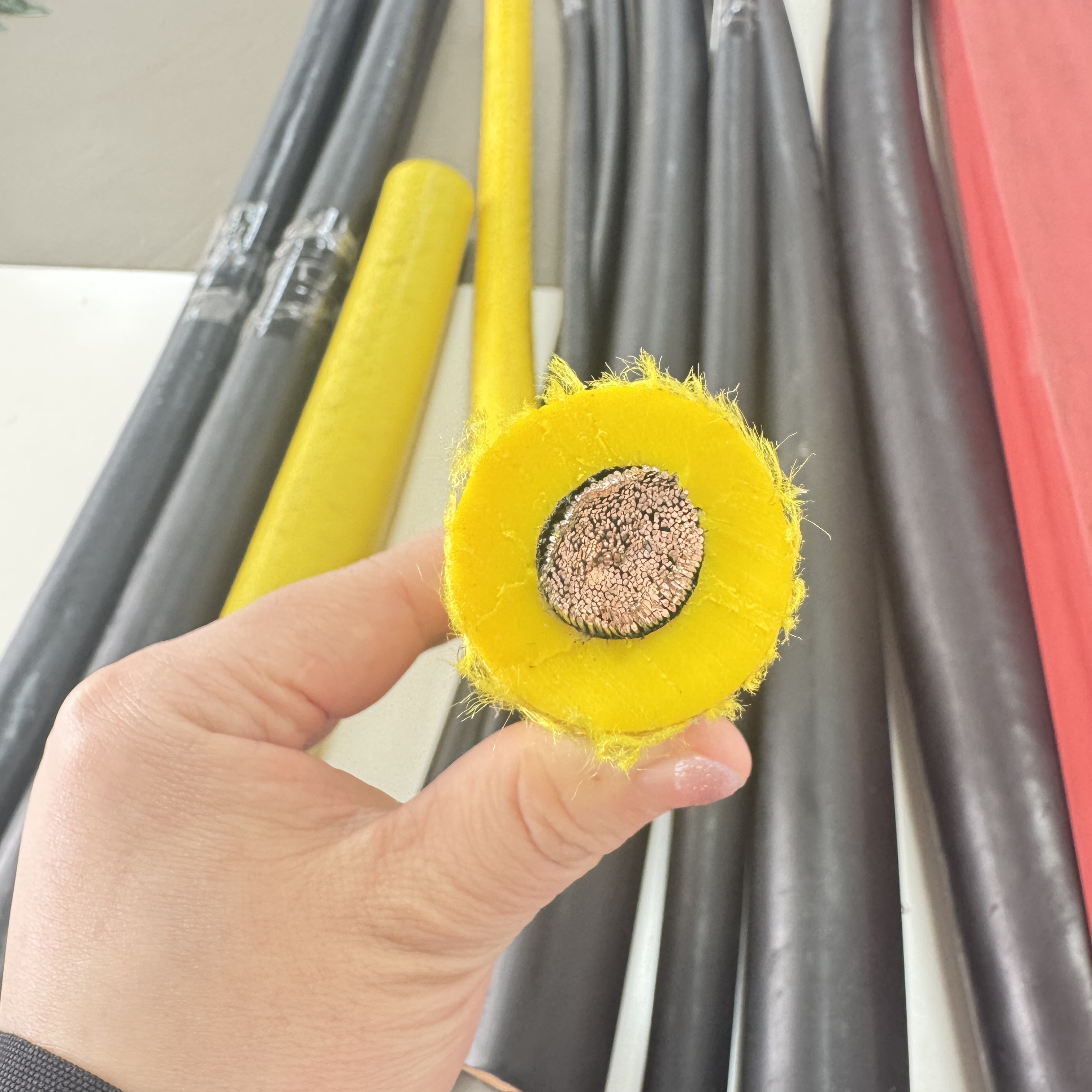
This section focuses on EPR-type insulation used in industrial power and control cables—most commonly formulated as EPDM (a key branch within the broader EPR family). These cables are selected for demanding environments where flexibility, durability, and resistance to aging matter.
Industrial EPDM (EPR) cables are widely used for low-, medium-, and (in many designs) medium-to-high voltage applications where the cable must withstand mechanical stress, moisture, and harsh site conditions. Compared with more rigid insulation systems, EPDM-based EPR insulation is often preferred when installation flexibility and long-term environmental resistance are priorities.
Common Applications:
Utilities & infrastructure: Power plants, substations, and auxiliary systems requiring reliable insulation performance.
Chemical plants & refineries: Environments where oils, acids, and chemicals may be present.
Marine & offshore: Wet, salty, and variable-temperature conditions where weatherability and durability are critical.
Mining & heavy industry: Applications involving vibration, movement, and tough handling.
Example (product mention):
RONA’s H07BQ-F EPDM (EPR-type) insulated rubber cable is designed for heavy-duty environments, combining flexibility and durability to meet rigorous industrial requirements. It is rated up to 450/750V and manufactured to relevant international standards for safety and reliability.
The table below helps prevent a common confusion: EPR in cable insulation (EPDM/EPR rubber) is completely different from EPR in USB‑C (Extended Power Range).
| Item | Industrial EPDM (EPR-type) Cables | USB‑C “EPR” (Extended Power Range) |
|---|---|---|
| What it refers to | Cable insulation material family (EPR-type, often EPDM-based) | A USB‑C Power Delivery capability level |
| Where it’s used | Industrial power/control cables; harsh environments | Consumer electronics charging and power delivery |
| Core value | Flexibility, durability, aging/weather resistance (design-dependent) | Higher power delivery capability (up to 240W under USB‑C PD) |
| Typical environments | Offshore, marine, mining, chemical plants, utilities | Laptops, monitors, docks, adapters |
| Key takeaway | A rubber insulation system used inside electrical cables | A power specification term, not a cable insulation material |
In consumer electronics, EPR may refer to Extended Power Range under USB‑C Power Delivery (up to 240W). This is not the same as EPR/EPDM rubber insulation used in industrial electrical cables—the acronym is shared, but the technologies are unrelated.
EPDM-based EPR-type insulation is popular in industrial cables because it balances electrical reliability with mechanical flexibility and environmental durability. For applications that involve movement, tight routing, or exposure to oils and weather, an EPDM insulated cable (including textile-braided / cloth-braided EPDM cable constructions) is often chosen to improve handling and service life.
EPDM (within the broader EPR family) is widely used as insulation because it can maintain stable dielectric performance under demanding operating conditions. In practical terms, an EPDM rubber cable is designed to reduce risks such as insulation breakdown, leakage current, and unplanned downtime—especially in industrial sites where cables see vibration, mechanical stress, and long run times.
Key benefits:
Reliable insulation integrity for power and control applications
Good dielectric strength stability across typical industrial temperature ranges
Durability under mechanical handling, especially for high-flex routing
One of the strongest reasons engineers select EPDM is its resistance to harsh environments. A well-designed EPDM weather-resistant cable can perform in outdoor exposure and industrial atmospheres where ozone and UV accelerate aging in other materials.
Typical resistance advantages (compound- and design-dependent):
Moisture resistance: helps limit water ingress-related failures in wet locations
Ozone resistance: supports long-term reliability for EPDM cable ozone-resistant use cases
UV / weathering performance: suitable for outdoor routing (an EPDM UV-resistant cable positioning when applicable)
Oil and chemical tolerance: many industrial designs are positioned as oil-resistant EPDM cable for plants, workshops, and heavy-duty equipment
Where cables are frequently bent, dragged, or routed through tight spaces, flexibility becomes a real performance factor—not just a convenience. In these scenarios, a high-flex EPDM cable (also described as a mobile EPDM cable) is commonly preferred.
Common scenarios:
Trailing and dragging in workshops, shipyards, and heavy industry
Repeated bending on moving equipment and portable power connections
Tight installation paths where smaller bending radius and “easy lay” matters
Safety & Compliance (Halogen-Free / Flame Performance)
Many EPDM (EPR-type) industrial cable designs are specified with safety requirements such as halogen-free and flame-retardant properties (exact performance depends on the standard and construction). This supports safer use in commercial and industrial installations where fire behavior and smoke/toxic gas concerns are evaluated.
Common compliance references (as applicable):
EN 50525-2-21 (for relevant rubber-insulated cable types)
VDE-related requirements where specified for quality and installation safety
This table keeps claims non-absolute while still highlighting where you can differentiate (e.g., “excellent” only if you can substantiate it in datasheets/test reports).
| Feature | EPDM (EPR-Type) Cables (Typical) | Your EPDM Cable Line (Example Positioning) |
|---|---|---|
| Halogen-free options | Often available (depends on design) | Available on selected models (if applicable) |
| Flame performance | Commonly specified (standard-dependent) | Designed to meet applicable standards |
| Chemical / oil resistance | Often strong vs. many plastics | Positioned as oil-resistant EPDM cable where required |
| Weathering (ozone/UV) | Typically a key advantage | Positioned as weather-resistant EPDM cable for outdoor use |
| Flexibility | Typically high | Offered as high-flex / mobile EPDM cable options |
Practical Takeaway (Where EPDM Shines)
If the installation involves movement, frequent bending, wet/chemical exposure, or outdoor weathering, EPDM-based EPR-type insulation is often the more forgiving choice—especially for EPDM rubber cables and textile-braided (cloth-braided) EPDM cables used in tough industrial duty.
CTA line (neutral, not salesy but SEO-friendly):
Explore EPDM options by environment (oil, outdoor weathering, moving equipment) and select the EPDM insulated cable construction that matches your mechanical and compliance requirements.
EPDM-based EPR-type insulation is often selected for industrial cable systems because it combines high flexibility, strong environmental durability, and low lifecycle disruption. In real-world installations—especially where cables face movement, oils, or outdoor exposure—an EPDM insulated cable (including textile-braided / cloth-braided EPDM cable constructions) can reduce installation difficulty and improve long-term stability.
A major advantage of EPDM (EPR-type) insulation is its flexibility and resilient “rubber feel”, which helps during pulling, routing, and tight bends. This is one reason high-flex EPDM cable options are commonly used in industrial sites where cable handling is frequent.
Why it matters on site:
Easier routing in crowded trays, tight cabinets, and curved paths
Better handling for moving equipment and repeated bending (mobile EPDM cable use cases)
Reduced risk of installation damage compared with stiffer constructions (design-dependent)
EPDM insulation is valued for resisting common aging drivers in industrial environments. Depending on compound and jacket design, an EPDM rubber cable can be positioned for improved durability where other materials may harden, crack, or degrade faster.
Typical durability advantages (compound- and design-dependent):
Oil and chemical exposure: often specified as an oil-resistant EPDM cable in workshops and plants
Outdoor aging: many designs perform well as an EPDM weather-resistant cable
Ozone & UV exposure: a frequent reason for specifying EPDM cable ozone-resistant / UV-resistant performance in outdoor routing
Temperature cycling: maintains flexibility across a broad operating range (per relevant standard and datasheet)
EPDM (EPR-type) cables may not always be the lowest-cost option at purchase, but they can be cost-effective when the application demands flexing, harsh environments, or reduced downtime. The value typically comes from fewer replacements, fewer repairs, and smoother installation.
This table is intentionally phrased as “typical” to avoid overpromising—final outcomes depend on duty cycle, environment, installation quality, and compliance requirements.
| Factor | EPDM (EPR-Type) Cables | Other Common Cable Types |
|---|---|---|
| Upfront cost | Often mid to premium (application-dependent) | Often lower in standard fixed-install builds |
| Service life in harsh duty | Often strong where flexing/oils/weathering are present | May degrade faster in the same harsh conditions |
| Maintenance / unplanned replacement | Often lower in moving, wet, or outdoor use cases | Can be higher if the insulation/jacket is less tolerant |
| Best-fit scenarios | High-flex EPDM cable, mobile EPDM cable, oil-resistant EPDM cable, weather-resistant EPDM cable | Many fixed installations with stable environments |
If your application involves frequent bending, moving equipment, dragging, oil exposure, or outdoor weathering, EPDM-based EPR-type insulation is often a safer selection than purely optimizing for the lowest initial cost—especially for EPDM insulated cables and textile-/cloth-braided EPDM cables designed for tough handling.
EPDM-based EPR-type insulation is widely used in industrial power and control cables where flexibility, environmental durability, and resistance to aging are important. In harsh-duty scenarios—especially with movement, oil exposure, and outdoor weathering—an EPDM insulated cable (including textile-braided / cloth-braided EPDM cable constructions) is a common choice for stable performance and easier handling.
Industrial users typically choose an EPDM rubber cable when the job site involves mechanical stress, repeated bending, and challenging environments.
Typical industries and scenarios:
Mining & tunneling: Powering mobile equipment, drills, and auxiliary systems where a high-flex EPDM cable helps manage frequent bending and dragging.
Marine & offshore: Shipboard systems and offshore facilities where moisture and salt exposure are constant; EPDM is often positioned as an EPDM weather-resistant cable for these conditions (design-dependent).
Construction & temporary power: Dynamic sites that benefit from robust, easy-to-route cable—often specified as a mobile EPDM cable for frequent repositioning.
Metallurgy & heavy industry: Areas with heat, vibration, and workshop contaminants where oil-resistant EPDM cable positioning may be relevant (depending on compound/jacket).
Ports & logistics yards: Outdoor routing and continuous handling where EPDM cable ozone-resistant / UV-resistant performance is often a spec driver (verify per datasheet/standard).
These examples keep the narrative “real-world” without overclaiming:
Mining operations: EPDM insulated cables used on mobile equipment to improve routing and reduce handling-related damage risk; high-flex EPDM cable designs are frequently selected for repeated bending zones.
Marine projects: EPDM rubber cables applied in shipboard distribution and auxiliary circuits where moisture and salt spray are expected; weather-resistant EPDM cable positioning can be valuable for exposed runs.
Construction sites: Temporary power layouts where cables are moved often; mobile EPDM cable and cloth-braided EPDM cable constructions can help with abrasion and handling demands.
The table below summarizes where EPDM (EPR-type) cables are commonly applied and why engineers choose them.
| Industry / Site | Typical Application | Why EPDM (EPR-Type) is Chosen |
|---|---|---|
| Mining | Mobile machinery feeds, trailing/dragging runs | High flexibility, durability under handling (high-flex EPDM cable) |
| Marine / Offshore | Shipboard systems, offshore auxiliaries | Moisture/salt tolerance; outdoor durability (EPDM weather-resistant cable) |
| Construction | Temporary power distribution, portable connections | Easy routing and repeated re-laying (mobile EPDM cable) |
| Ports / Outdoor yards | Exposed runs, frequent handling | Weathering resistance; ozone/UV exposure suitability (EPDM cable ozone-resistant / UV-resistant, design-dependent) |
| Plants / Workshops | Areas with oils and industrial contaminants | Often specified for oil resistance (oil-resistant EPDM cable, compound-dependent) |
| Heavy-duty flexible leads | Equipment connections needing tough handling | Textile reinforcement options (textile-braided / cloth-braided EPDM cable) |
Application fit depends on voltage rating, sheath/jacket material, conductor class, and compliance standard. When positioning EPDM benefits (oil, ozone, UV, weather), tie each claim to your product’s datasheet and test standards to keep the content credible and audit-safe.

The outlook for EPDM-based EPR-type cables remains strong as industries demand higher reliability, tougher environmental performance, and easier maintenance. What’s changing isn’t the core value of an EPDM insulated cable, but how it’s engineered—through improved compounds, smarter designs, and more application-specific constructions such as high-flex EPDM cable and textile-braided / cloth-braided EPDM cable options.
Innovation in EPDM (EPR-type) cables is increasingly focused on getting more performance out of the same footprint—especially in harsh-duty industrial environments.
Key technology directions:
Enhanced EPDM compounds (materials engineering): New EPR/EPDM formulations aim to improve flexibility retention, aging resistance, and durability under thermal cycling—supporting EPDM rubber cable performance in demanding duty (results are compound- and standard-dependent).
Better resistance packages for harsh sites: More products are being positioned for outdoor and industrial exposure, including EPDM weather-resistant cable designs and verified EPDM cable ozone-resistant / UV-resistant performance where required by the application.
High-flex construction optimization: Stranding, insulation geometry, and sheath designs are being optimized for repeated bending and dynamic routing—supporting mobile EPDM cable and high-flex EPDM cable use cases.
Reinforced outer layers for handling: In portable or heavy-duty service, textile-braided (cloth-braided) EPDM cable constructions can be used to improve handling robustness and abrasion tolerance (design-dependent).
Smart cable & condition monitoring (select applications): Sensor-enabled cables are emerging for critical assets, enabling temperature/load monitoring and maintenance planning. Adoption is typically driven by uptime requirements rather than general-purpose installations.
Growth for EPDM (EPR-type) cables is largely pulled by sectors that combine high duty cycles with environmental stress—exact volumes vary by region, policy, and standards.
Where EPDM insulated cable demand is likely to increase:
Renewable energy & grid modernization: More interconnection points, outdoor runs, and higher utilization can favor robust insulation systems—often aligning with EPDM weather-resistant cable positioning for exposed environments.
EV charging infrastructure & electrified transport: Charging sites and supporting infrastructure can involve outdoor exposure, heat cycling, and maintenance access needs; EPDM designs may be selected where durability and flexibility are prioritized.
Heavy industry upgrades: Mining, ports, metallurgy, and process plants continue to value durability under oils, handling, and weather—supporting use cases for oil-resistant EPDM cable and high-flex designs.
Marine & offshore projects: Salt air, moisture, and constant mechanical stress keep EPDM relevant for demanding installations (subject to applicable marine standards).
This table avoids unverified growth rates and instead links each segment to realistic engineering drivers and the EPDM long-tail terms you want exposed.
| Market Segment | Primary Drivers | Typical EPDM (EPR-Type) Positioning |
|---|---|---|
| Renewable energy / grid | Outdoor exposure, long service life, reliability | EPDM weather-resistant cable, ozone/UV positioning where verified |
| EV charging & infrastructure | Outdoor installs, thermal cycling, uptime expectations | Durable EPDM insulated cable; maintenance-friendly routing |
| Mining / heavy industry | Handling abuse, movement, contaminants | High-flex EPDM cable, mobile EPDM cable, oil-resistant EPDM cable (as applicable) |
| Marine / offshore | Moisture, salt spray, harsh weather | EPDM rubber cable designs suited for marine duty (standard-dependent) |
| Temporary power & job sites | Frequent relocation, tight routing | Mobile EPDM cable, cloth-braided EPDM cable for tough handling |
Future-facing content works best when it stays spec-friendly:
Use “design-dependent / compound-dependent” when talking about oils, UV, ozone, and chemicals.
Where possible, tie key claims (e.g., EPDM cable ozone-resistant / UV-resistant) to test standards and datasheets rather than general statements.
Avoid hard growth numbers unless you can cite a specific market report.
EPDM-based EPR-type cables remain a dependable choice for industrial environments where flexibility, durability, and stable electrical insulation are non-negotiable. From tight routing to harsh outdoor exposure, an EPDM insulated cable can deliver consistent performance while helping reduce installation stress and long-term maintenance risk.
Explore RONA’s EPDM (EPR-type) cable options to find the perfect fit for your needs and experience the benefits of advanced cable technology.
A: It varies by temperature, mechanical stress, and environment. Use the cable datasheet ratings and applicable standards for the most reliable expectation.
A: Yes. Many designs suit outdoor use; confirm weather/UV/ozone performance per the product datasheet (e.g., EPDM weather-resistant specifications).
A: Match the cable to environment (oil/moisture/outdoor), mechanical duty (fixed vs. high-flex/mobile), and required voltage/standard compliance.
A: EPDM (EPR-type) cables must stay within their rated temperature and application limits. Chemical/oil resistance is compound- and jacket-dependent.


