

Views: 0 Author: Site Editor Publish Time: 2026-03-12 Origin: Site
Industrial machines run in heat, vibration, and dust. Can one Industrial Cable handle every task? Sometimes power cables work well. Other times fiber communication performs better. In this article, you will learn when to choose Industrial Cable or fiber in harsh environments.
An Industrial Cable is designed for demanding environments where ordinary electrical cables cannot operate reliably. It carries power, control signals, and operational data between machines and control systems. Factories, ports, automation lines, and energy facilities rely on these cables every day. They must work continuously even when exposed to vibration, movement, chemicals, and temperature fluctuations.
The main functions of an Industrial Cable include:
● Power transmission for industrial equipment
Industrial machinery such as conveyors, pumps, and robotic arms require stable power delivery. Industrial cables are built with strong conductors and insulation layers to handle high electrical loads. Even in harsh environments, they maintain reliable current flow for long operational cycles.
● Control signal transmission for automation systems
In automated factories, signals move constantly between PLC controllers, sensors, and machines. Industrial cables transmit these signals accurately. This allows machines to perform coordinated actions and maintain production precision.
● Data connectivity between machines and control units
Smart manufacturing systems collect operational data from many devices. Industrial cables help connect monitoring equipment and control networks. They enable operators to supervise production conditions in real time.
● Durability against mechanical and environmental stress
Harsh environments expose cables to vibration, bending, chemicals, and extreme temperatures. Industrial cables use reinforced insulation and flexible conductor designs. These features help maintain electrical stability and extend service life.
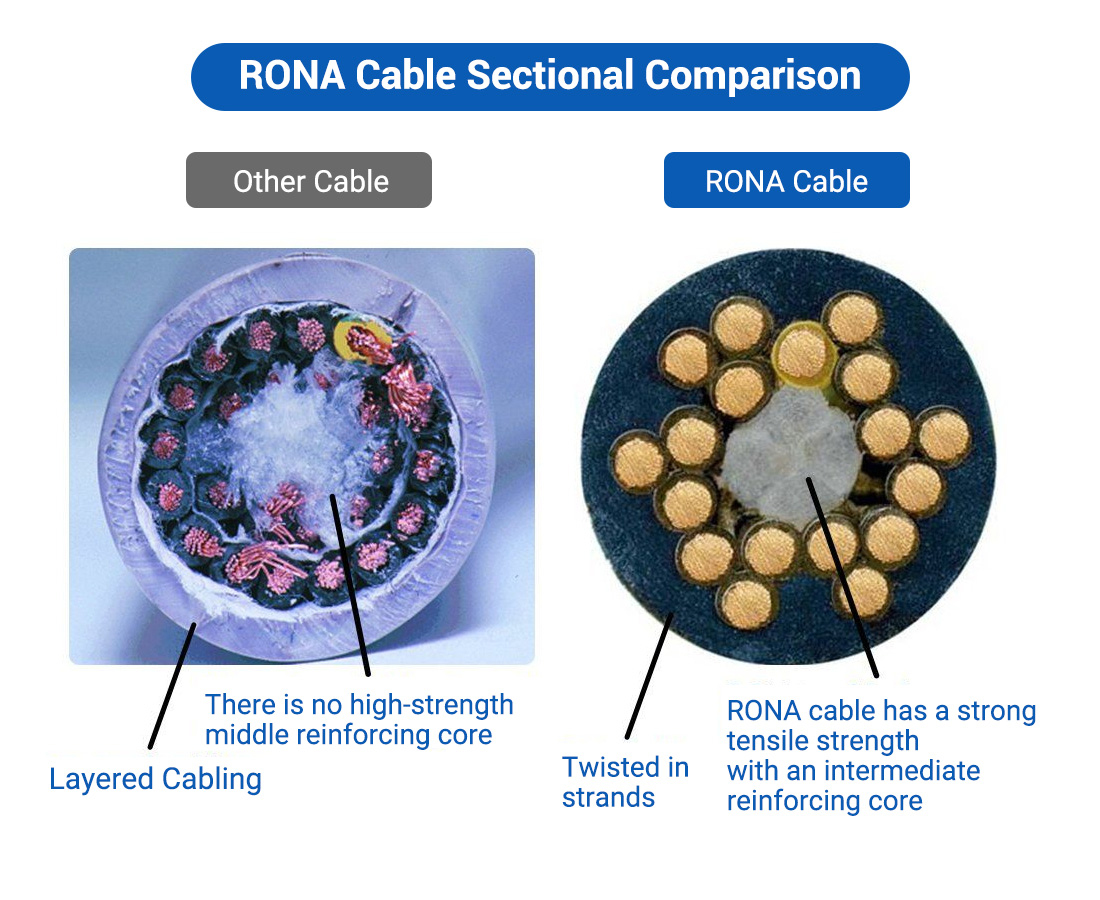
Different industries require specialized cable designs. The structure and materials of an industrial cable depend on how the equipment moves and what environment the cable faces.
Some of the most commonly used industrial cable types include:
● Drag chain cables
These cables operate inside cable carriers in automated equipment. Machines such as CNC systems and robotic arms move repeatedly. Drag chain cables are designed to bend thousands of times without damaging internal conductors.
● Reeling cables
Reeling cables are commonly used on large mobile equipment like cranes and mining machines. They wind and unwind from cable drums as equipment moves. Their insulation resists mechanical pulling forces and outdoor weather conditions.
● Festoon cables
Festoon systems support equipment that travels across long distances, such as overhead cranes and conveyor systems. The cable moves along a track with trolleys. High flexibility prevents damage during constant motion.
● Watertight cables
Facilities exposed to water or humidity require sealed cable structures. Watertight cables prevent moisture from entering the insulation layer. These cables are widely used in marine environments, wastewater plants, and outdoor industrial sites.
In many industrial systems, traditional Industrial Cable remains essential for power transmission and machine control. Yet certain operational conditions require higher data speed or stronger signal stability. Optical fiber becomes advantageous when electrical transmission faces limitations such as signal loss or electromagnetic interference.
The following situations typically favor optical fiber communication:
● Long-distance data transmission requirements
Large industrial facilities often spread across multiple buildings or outdoor equipment areas. Electrical cables can experience signal attenuation over long distances. Fiber optics maintain stable data transmission across several kilometers. It becomes especially useful in large manufacturing campuses, logistics hubs, and port terminals.
● High-speed industrial communication networks
Modern production lines generate significant operational data. Sensors, cameras, and automated systems continuously exchange information. Fiber networks support high-bandwidth industrial communication. They allow faster data transfer between machines, control rooms, and monitoring systems.
● Industrial environments with strong electromagnetic interference (EMI)
Heavy electrical equipment generates electromagnetic fields. Motors, transformers, and high-voltage systems can interfere with copper cables. Optical fiber avoids this problem completely because it transmits light signals. In these situations, fiber provides more stable communication.
Communication Requirement | Electrical Industrial Cable | Optical Fiber Cable |
Long-distance transmission | Signal loss increases over distance | Maintains stable transmission over kilometers |
High-speed data networks | Limited bandwidth | Very high bandwidth capacity |
EMI-heavy environments | Susceptible to interference | Completely immune to electromagnetic noise |
Harsh industrial environments often challenge communication infrastructure. Temperature fluctuations, vibration, and chemical exposure can affect traditional cable performance. Optical fiber cables are often deployed in these environments because their structure and materials offer strong resistance to interference and signal loss.
Several industrial sectors commonly rely on fiber-based communication networks:
● Oil and gas facilities
Exploration sites and refineries operate in explosive or hazardous environments. Fiber cables provide safe communication because they carry no electrical current. Monitoring systems, sensors, and control networks depend on reliable data transmission across large areas.
● Power plants and electrical substations
High-voltage environments create strong electromagnetic interference. Optical fiber communication allows monitoring systems to operate accurately. Engineers use fiber networks to connect protection relays, control systems, and grid monitoring devices.
● Outdoor industrial networks connecting multiple buildings
Many factories include separate production buildings, storage facilities, and control centers. Fiber optic communication lines link these areas together. Ruggedized jackets protect the cable from sunlight, moisture, and environmental damage.
● Monitoring systems for tunnels, pipelines, and infrastructure
Fiber optic sensors can measure temperature, strain, and vibration across long distances. Infrastructure operators use them to detect early structural changes. This technology supports pipeline safety, bridge monitoring, and tunnel condition analysis.
Optical fiber technology offers several advantages in industrial environments where reliable communication is critical. These benefits become more important as automation systems and smart factories generate larger amounts of data.
The major advantages include:
● High bandwidth and low signal attenuation
● Fiber cables transmit large amounts of data quickly. They maintain signal strength over long distances. This allows industrial networks to support advanced monitoring systems and real-time control.Immunity to electrical noise and interference
Electrical equipment can disrupt copper communication cables. Fiber optics eliminate this risk. Because signals travel as light, they remain unaffected by electromagnetic fields.
● Lightweight design and improved safety
Fiber cables are smaller and lighter than many electrical cables. They are also safer in explosive environments because they do not generate sparks. This feature makes them suitable for chemical plants and energy facilities.
● Reliable performance in extreme industrial conditions
Protective jackets and armored structures protect fiber cables from environmental damage. They can withstand temperature changes, moisture, and mechanical pressure. These characteristics allow stable network communication in demanding industrial sites.
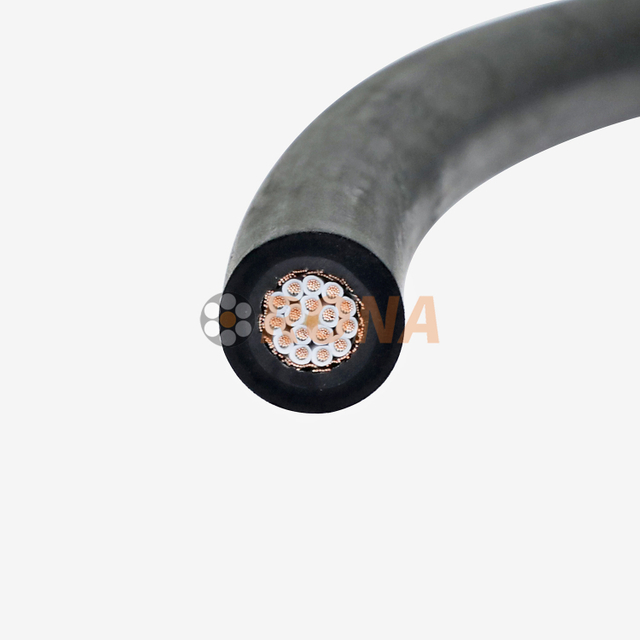
Optical fiber cables are generally divided into single-mode and multi-mode types. Each design supports different transmission distances and data capacity. Engineers select the appropriate option depending on network scale, bandwidth requirements, and installation environment.
Single-mode fiber uses a very small core diameter. Light travels through the fiber along one single path. This reduces signal dispersion and allows data to move across extremely long distances. Large industrial sites often use it to connect separate buildings, control centers, and outdoor equipment systems.
Multi-mode fiber uses a wider core. Multiple light paths travel inside the cable. This design supports shorter communication distances but allows easier installation and lower equipment costs. It often appears inside factories, production lines, and control rooms.
Typical scenarios where each type is used include:
● Single-mode fiber networks
○ Long industrial campus networks
○ Outdoor communication between facilities
○ Utility monitoring and infrastructure networks
● Multi-mode fiber networks
○ Factory automation systems
○ Equipment monitoring inside plants
○ Industrial control rooms or server cabinets
Besides transmission type, fiber optic cables also differ in structural design. The internal construction determines how well the cable performs in harsh environments. Two common structures are loose tube fiber and tight buffered fiber.
Loose tube cables place fiber strands inside protective tubes filled with water-blocking materials. The fibers remain slightly free inside the tube. This design reduces stress caused by temperature expansion or mechanical movement. Because of this flexibility, loose tube cables work well outdoors or in industrial environments where temperature varies widely.
Typical characteristics of loose tube fiber cables include:
● Strong resistance to temperature fluctuations
● Protection from moisture and humidity
● Suitability for outdoor installations and underground networks
● Improved durability for long-distance infrastructure communication
Tight buffered cables use a different design. Each fiber strand receives its own protective coating. The coating creates a more compact cable structure and improves handling during installation. Tight buffered cables are easier to terminate and connect to equipment.
They are often installed in:
● Control rooms
● Industrial data cabinets
● Equipment racks and automation systems
● Indoor communication backbones inside factories
Mechanical protection also influences cable installation decisions. In harsh industrial conditions, engineers may select additional protective structures such as armored layers or reinforced jackets.
Fiber optic cables follow international classification standards. These standards help engineers select the correct fiber type based on bandwidth, transmission distance, and network performance requirements.
Single-mode fibers typically follow the OS1 and OS2 classifications. Multi-mode fibers follow the OM series, which includes several performance levels. Each version supports different bandwidth capacities and network speeds.
Common industrial fiber models include:
● OS1 fiber
○ Designed mainly for indoor single-mode installations
○ Often used in building backbone communication systems
● OS2 fiber
○ Optimized for long-distance outdoor communication
○ Common in industrial campuses and infrastructure networks
● OM1 / OM2 fibers
○ Early multi-mode designs
○ Suitable for short communication distances in industrial buildings
● OM3 / OM4 fibers
○ High-bandwidth multi-mode solutions
○ Widely used in automation networks and data communication systems
Fiber Standard | Fiber Type | Typical Use Environment | Industrial Example |
OS1 | Single-Mode | Indoor backbone networks | Control rooms |
OS2 | Single-Mode | Long outdoor transmission | Plant-to-plant communication |
OM1 / OM2 | Multi-Mode | Short indoor connections | Equipment rooms |
OM3 / OM4 | Multi-Mode | High-speed factory networks | Automation monitoring |
Smart factories require a balanced infrastructure. Equipment must receive stable electrical power. At the same time, production systems generate large amounts of operational data. Combining Industrial Cable and fiber communication networks allows factories to support both needs efficiently.
Industrial cables play a central role in powering equipment and transmitting control signals. Motors, robotic arms, conveyor belts, and processing machines rely on reliable electrical connections. These cables are designed to withstand continuous motion, vibration, and temperature changes.
Fiber optic cables support the data layer of the system. They connect sensors, programmable logic controllers, and monitoring platforms. Because fiber uses light to transmit signals, it avoids electromagnetic interference from heavy machinery.
Key functions of both cable technologies include:
● Industrial cable functions
○ Deliver electrical power to machinery and automation systems
○ Transmit control signals between sensors, actuators, and PLC controllers
○ Maintain reliable machine operation in demanding environments
● Fiber optic cable functions
○ Provide high-speed communication between control systems
○ Connect industrial monitoring networks and data centers
○ Support real-time data transfer for Industry 4.0 applications
Infrastructure Layer | Cable Type | Primary Function | Example Equipment |
Power Distribution | Industrial Cable | Electrical power supply | Motors, conveyors |
Machine Control | Industrial Cable | Control signal transmission | PLC systems, robotics |
Data Communication | Fiber Optic Cable | High-speed data exchange | Sensors, monitoring systems |
Network Backbone | Fiber Optic Cable | Long-distance communication | Factory networks |
Many industrial sectors depend on a combination of electrical and optical cabling. Heavy machinery requires reliable power transmission, while monitoring systems demand fast and stable communication networks. Using both Industrial Cable and fiber optic solutions allows operators to maintain equipment efficiency while supporting modern data-driven operations.
Several types of industrial systems commonly integrate both cable technologies:
● Port cranes and automated container terminals
Container handling equipment operates across large outdoor areas. Industrial cables power crane motors and lifting mechanisms. Fiber optic networks connect control systems, positioning sensors, and monitoring software. This setup allows operators to track cargo movement and manage terminal operations in real time.
● Robotics and automated production lines
Manufacturing robots depend on reliable electrical connections for motion control. Industrial cables support robotic arms, conveyor systems, and machine tools. Meanwhile, fiber networks link the production line to central control systems and data platforms. This integration enables fast communication between machines and improves production efficiency.
● Power generation monitoring systems
Power plants include turbines, generators, and large electrical equipment. Industrial cables provide power and control connections within the facility. Fiber optic networks transmit monitoring data to centralized control rooms. Engineers can analyze system performance and detect anomalies before equipment failure occurs.
● Infrastructure monitoring and sensing systems
Fiber optic sensors can detect temperature, vibration, or strain along long distances. They are often installed in pipelines, bridges, and tunnels. Industrial cable networks power monitoring devices and control equipment connected to the sensing system.
Industrial Cable powers machines and control systems in harsh sites. Fiber supports fast data over long distances. Together they improve reliability and safety. RONA provides durable Industrial Cable solutions for demanding industrial environments.
A: An Industrial Cable delivers power and control signals for machines in factories and heavy industries.
A: Fiber works better for long-distance data or strong EMI environments, while Industrial Cable powers equipment.
A: Industrial Cable resists heat, vibration, and chemicals, keeping machines running safely.
A: Industrial Cable powers machines, while fiber moves data quickly across industrial networks.
A: Industrial Cable cost depends on materials, flexibility, and environmental protection needs.


