

Views: 0 Author: Site Editor Publish Time: 2026-03-12 Origin: Site
Modern ports move containers fast. Every crane depends on reliable cables. Without a strong Spreader Cable, lifting systems may fail.
In this article, we explore how reeling cable and Spreader Cable work in crane systems. You will learn how optical fiber improves communication, safety, and efficiency in modern port operations.
A Spreader Cable is a specialized industrial cable used to connect the crane trolley and the container spreader device. The spreader is the lifting tool that locks onto containers during loading and unloading. It requires stable power and control signals while moving vertically during crane operations.
In port crane systems, the Spreader Cable must operate under continuous motion and mechanical stress. It supplies electricity to spreader motors, transmits control commands, and may also carry communication signals when optical fiber elements are integrated. Because cranes operate in outdoor environments, the cable must resist wind, moisture, and temperature changes.
Typical roles of a Spreader Cable include:
● Delivering electrical power to spreader control systems and motors
● Transmitting command signals between the crane and the spreader
● Supporting monitoring systems and automation equipment
● Integrating fiber optics for high-speed data communication in smart ports
In container crane operations, the spreader moves vertically to grab and lift containers. The Spreader Cable extends and retracts together with the spreader, adapting to the changing height of the lifting operation. This continuous motion creates significant mechanical stress on the cable.
To manage this movement safely, crane systems typically use structured cable storage mechanisms. The two most common systems are:
● Basket collection systems
Excess cable is stored in a collector basket mounted near the crane trolley. As the spreader lowers, cable loops are gradually released. When lifting, the loops return to the basket. This method reduces mechanical stress and protects the cable from wind damage.
● Drum reeling systems
In this design, the cable is wound around a drum that rotates as the spreader moves. The drum automatically adjusts cable length, ensuring smooth winding and preventing twisting.
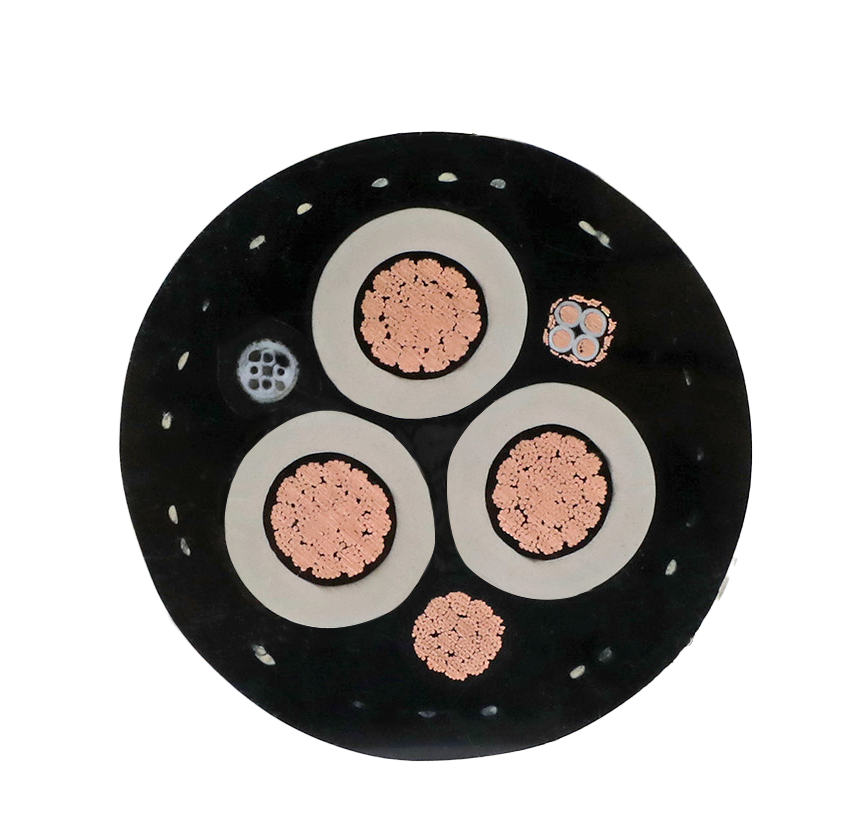
Because port cranes operate continuously in harsh coastal environments, a Spreader Cable must meet strict mechanical and electrical performance requirements. These requirements ensure safe lifting operations and long service life.
Important design characteristics include:
● High tensile strength to support vertical suspension loads during lifting
● Excellent flexibility to withstand repeated bending and movement
● Abrasion resistance to handle friction and mechanical wear
● Weather resistance against UV radiation, moisture, and salt air
● Stable electrical insulation for safe power transmission
Performance Requirement | Purpose in Crane Systems | Operational Benefit |
High Tensile Strength | Supports long vertical suspension | Prevents cable stretching during lifting |
High Flexibility | Allows repeated movement cycles | Extends service life in dynamic systems |
Weather & UV Resistance | Protects against outdoor conditions | Maintains durability in coastal ports |
Stable Electrical Insulation | Ensures safe power transmission | Prevents signal interruption and faults |
A Reeling Cable is a flexible industrial cable designed for systems where the cable is repeatedly wound and unwound on a drum. In port crane operations, it supplies power and control signals to moving equipment such as trolleys, gantry systems, and mobile machinery. The cable must stay stable during continuous motion and high mechanical stress.
A Spreader Cable, however, mainly follows the vertical movement of the container spreader. It often operates in basket collection systems or vertical lifting setups. Reeling cables instead work in long-travel motion systems where the cable drum automatically controls cable length.
Key functional differences between the two cable types include:
● Motion pattern
Reeling cables support horizontal travel and long-distance movement. Spreader cables mainly support vertical lifting systems used for container handling.
● Cable management method
Reeling cables are stored on a rotating drum. Spreader cables are typically collected in baskets or gravity-fed storage systems.
● Typical equipment usage
Reeling cables power moving crane structures. Spreader cables connect directly to the spreader device.
Flexible industrial cable manufacturers such as RONA Cable develop motion cables designed for cranes, automated terminals, and other heavy-duty equipment where durability and flexibility are critical.
In a crane reeling system, the cable drum automatically adjusts cable length as the crane moves. When the crane trolley travels forward, the drum unwinds the cable. When it returns, the drum rewinds the cable again. This mechanism maintains a continuous electrical connection between moving equipment and the fixed power supply.
During operation, the cable experiences several mechanical forces. Engineers must design the cable to handle these conditions safely.
Important operational stresses include:
● Tension forces created by cable weight and travel distance. These forces increase as cranes operate over long spans.
● Torsion stress produced during repeated winding cycles. Proper drum alignment helps prevent twisting damage.
● Abrasion and environmental exposure caused by friction, dust, oil, UV radiation, and moisture common in port environments.
Because container terminals often run continuously, reliable cable movement is essential. High-quality reeling cables help maintain smooth crane operation and reduce maintenance downtime.
A high-performance Reeling Cable uses multiple structural layers to balance flexibility and durability. Each layer plays a role in maintaining electrical performance while protecting the cable from mechanical stress.
Typical structural elements include:
● Flexible copper conductors
These conductors ensure efficient power transmission while allowing the cable to bend repeatedly without damage.
● Insulation and shielding layers
Insulation protects conductors and prevents electrical interference between cores.
● Tensile reinforcement components
Aramid or textile fibers strengthen the cable and help it withstand high tensile loads.
● Abrasion-resistant outer sheath
Materials such as PUR or rubber compounds protect the cable from oils, chemicals, and harsh outdoor conditions.
Structural Element | Function in Reeling Cable |
Flexible Copper Conductors | Maintain electrical conductivity during continuous motion |
Insulation Layers | Protect internal conductors and ensure electrical safety |
Reinforcement Fibers | Improve tensile strength and prevent stretching |
Outer Protective Sheath | Resist abrasion, chemicals, and environmental damage |
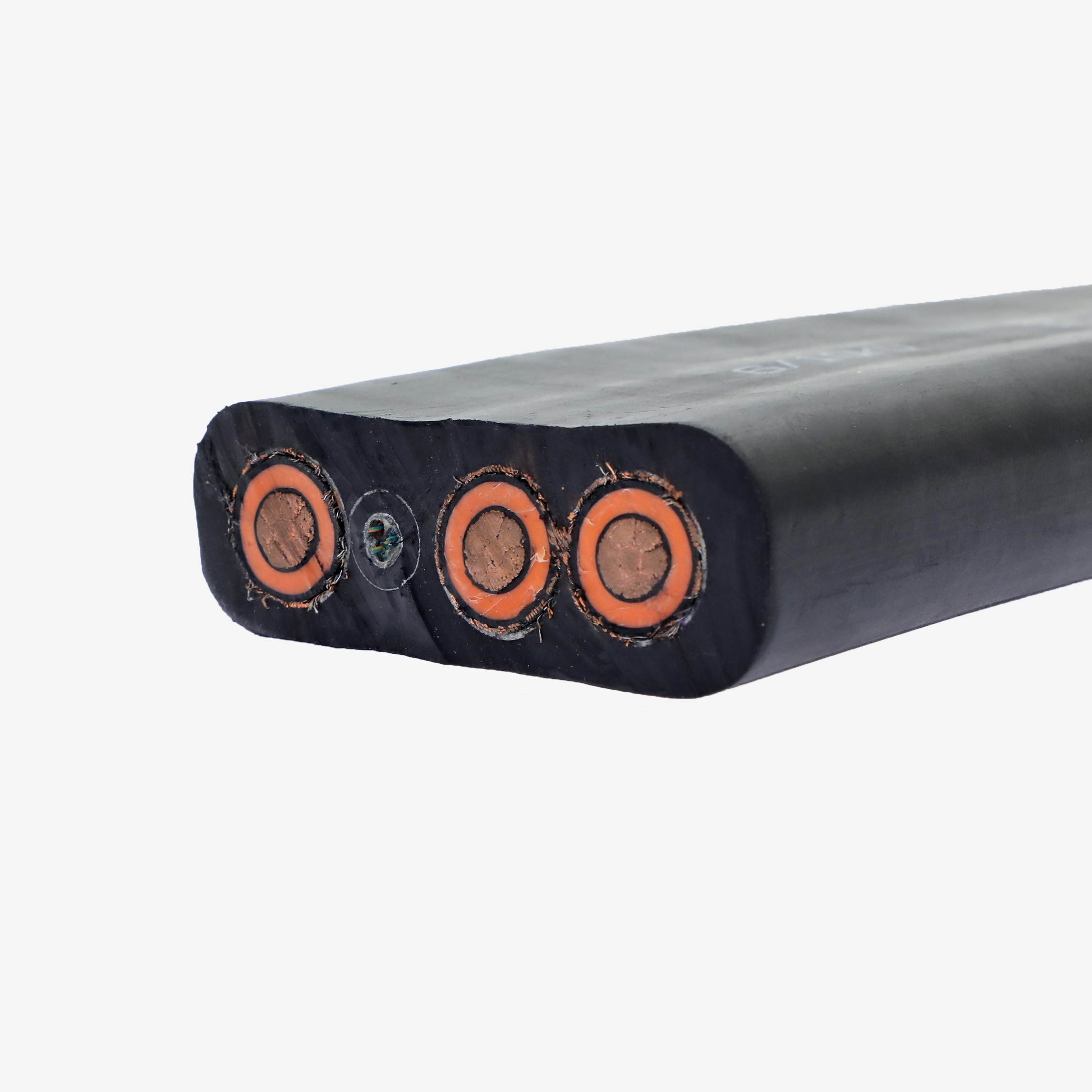
Modern container terminals rely heavily on real-time data. Cranes move quickly. Equipment communicates constantly. Because of this, many Spreader Cable and reeling cable systems now include optical fiber cable inside their structure.
Traditional copper conductors handle electrical power and control signals. Optical fibers handle high-speed data transmission. When these two technologies work together, crane systems become more responsive and easier to monitor.
In automated terminals, fiber communication helps cranes coordinate movement, transmit sensor data, and connect to terminal operating systems. This improves equipment control while reducing signal interference common in heavy industrial environments.
Typical reasons optical fiber is used in crane cable systems include:
● High data transmission speed
Fiber allows large volumes of operational data to move quickly between cranes and control centers. This supports automated crane positioning and monitoring.
● Strong resistance to electromagnetic interference
Port environments contain motors, converters, and high-power electrical equipment. Fiber signals remain stable even when electrical noise is present.
● Long communication distance
Large container terminals may span hundreds of meters. Fiber optics transmit data reliably across long distances without signal degradation.
Because of these advantages, many modern crane cable systems integrate fiber communication into Spreader Cable designs, especially in automated ports.
Industrial crane cables typically use either single-mode fiber or multimode fiber, depending on communication distance and network speed requirements. These fiber types are chosen carefully to match the operational environment of port equipment.
Single-mode fibers are widely used in large port terminals where data must travel long distances between cranes and central control systems. Multimode fibers are often used for shorter communication links inside equipment systems.
| Fiber Type | Typical Model | Key Feature | Typical Use in Crane Systems |
| Single-Mode Fiber | G.652D | Standard telecom fiber for long-distance transmission | Port communication networks |
| G.657A1 | Bend-insensitive fiber | Flexible industrial cable routing | |
| G.657A2 | Higher bend tolerance | Compact cable structures | |
| Multimode Fiber | OM3 | High-bandwidth laser-optimized fiber | Automation networks |
| OM4 | Higher speed short-range transmission | Smart terminal data systems | |
| 6LWL (6-core 62.5/125 μm) | Multi-core multimode fiber commonly used in reel cables | Crane drum cables and port machinery | |
| 12LWL (12-core 62.5/125 μm) | Higher fiber count for complex control systems | Port crane reel cables and industrial automation |
These optical fibers are integrated inside industrial cables so they remain protected from mechanical stress and environmental exposure.
A hybrid cable combines several transmission functions into a single structure. Inside one cable jacket, engineers place power conductors, control cores, and optical fiber elements. This design reduces installation complexity and simplifies crane cable management.
A typical hybrid crane cable structure may contain:
● Flexible copper conductors for electrical power supply
● Control cores used for signal transmission and feedback systems
● Optical fiber units for high-speed data communication
● Reinforcement elements such as aramid yarn for tensile strength
● A durable outer sheath resistant to abrasion and weather
In container crane systems, hybrid cables help reduce the number of separate cable lines required. Instead of installing different cables for power and communication, engineers can install a single integrated cable system.
Smart ports rely on automation and digital monitoring. Integrating optical fiber into Spreader Cable and reeling cable systems allows cranes to communicate continuously with control systems.
This integration improves several operational aspects of container handling.
Key operational advantages include:
● Real-time equipment monitoring
Sensors installed on cranes transmit operating data through fiber networks. Operators can detect faults early and improve maintenance planning.
● Improved automation capability
Automated RTG and RMG cranes rely on fast communication between machines and control software. Fiber communication supports precise positioning and container handling.
● Higher operational safety
Fiber networks help transmit signals from cameras, sensors, and safety systems installed on cranes.
● Better terminal efficiency
Faster communication reduces delays between control commands and equipment response. Container throughput improves as a result.
As global ports continue adopting automated technologies, hybrid cables combining power conductors and optical fiber communication are becoming a key component of advanced crane systems.
Selecting the right Spreader Cable begins with mechanical performance. Port cranes operate constantly. The spreader moves up and down all day. The cable must follow this motion while supporting its own weight and electrical load.
Engineers usually focus on three core factors: tensile strength, bending capability, and torsion resistance. If any of these properties are insufficient, cable fatigue may occur quickly. In vertical lifting systems, tensile stress becomes especially critical because the cable may hang freely over long distances.
Important mechanical considerations include:
● High tensile capacity
The cable must carry its own weight and the weight of internal conductors. In tall cranes, the suspension length can be significant. Reinforcement structures prevent stretching and structural damage.
● Controlled bending radius
The cable bends repeatedly as the spreader moves. A flexible structure helps prevent internal conductor fatigue. Smaller bending radii also improve cable routing inside crane systems.
● Torsion resistance
Movement and wind can cause cable twisting. Special structural designs help stabilize the cable and reduce torsional stress during operation.
Mechanical Factor | Engineering Purpose | Benefit in Crane Operation |
Tensile Strength | Supports long vertical suspension | Prevents structural cable damage |
Bending Radius | Allows repeated cable movement | Reduces conductor fatigue |
Torsion Resistance | Limits cable twisting | Improves cable stability |
Port cranes operate outdoors. Salt air, sunlight, moisture, and industrial pollutants can all affect cable performance. A reliable Spreader Cable must maintain electrical stability even under harsh environmental exposure.
Environmental resistance is therefore an essential part of cable design. Engineers typically evaluate several protection properties before selecting a cable for crane systems.
Key environmental requirements include:
● UV resistance
Direct sunlight can degrade some plastics. UV-resistant jackets help maintain long service life in open port environments.
● Moisture and humidity protection
Coastal ports experience high humidity and salt exposure. Protective sheaths prevent moisture penetration into the cable structure.
● Oil and chemical resistance
Crane equipment may operate near lubricants, fuels, or hydraulic fluids. Resistant materials prevent insulation damage.
● Wide temperature tolerance
Port operations may face both hot summers and cold winters. Cables must maintain flexibility across a wide temperature range.
In many crane systems, the unused cable length is stored in baskets or drum mechanisms during vertical movement. These systems help protect the cable from direct environmental exposure while maintaining operational safety.
Material selection plays a major role in cable reliability. A well-designed Spreader Cable uses multiple protective layers to balance flexibility, strength, and environmental resistance.
Engineers typically combine several specialized materials to achieve this performance.
Common cable material technologies include:
● PUR outer jackets
Polyurethane sheaths provide strong abrasion resistance. They also resist oils, chemicals, and mechanical wear common in industrial environments.
● Rubber or elastomer insulation
These materials maintain flexibility even during frequent bending cycles. They also offer strong electrical insulation properties.
● Aramid reinforcement elements
Aramid fibers increase tensile strength without adding excessive weight. They help the cable withstand long suspension distances in crane lifting systems.
Additional structural components may include textile strain relief layers or protective inner sheaths. These structures stabilize internal conductors and prevent mechanical damage during operation.
Manufacturers such as RONA Cable focus on advanced material engineering when designing flexible industrial cables. Their motion cable solutions integrate reinforced structures, durable outer jackets, and strict manufacturing controls to support demanding crane and port automation applications.
Reeling and Spreader Cable systems support stable crane motion and data flow. Fiber integration improves control and monitoring. RONA designs flexible industrial cables built for strength, durability, and reliable performance in demanding port crane operations.
A: A Spreader Cable supplies power and control signals to the crane spreader during container lifting operations.
A: A Spreader Cable extends and retracts as the spreader moves vertically, maintaining continuous power and signal transmission.
A: Optical fibers allow Spreader Cable systems to transmit high-speed data for monitoring and automation.
A: Reeling Cable powers moving crane parts horizontally, while Spreader Cable mainly supports vertical spreader movement.
A: Durability depends on tensile strength, weather resistance, bending flexibility, and reinforced cable structure.


