

Views: 0 Author: Site Editor Publish Time: 2026-03-12 Origin: Site
Machines move constantly in modern factories. How can cables carry data and power safely? Drag Chain Cable and Flexible Cable systems solve this challenge.
This article explores optical fiber integration in motion cables. In this article, you will learn how flexible cables support fast data and reliable industrial automation.
A Drag Chain Cable is designed to operate inside cable carrier systems. The carrier guides cables along moving machine components. It prevents twisting and keeps the bending radius controlled. Because machines repeat movement constantly, the cable must endure continuous flexing without failure.
Typical drag chain cable features include:
● Fine-strand copper conductors
Many thin wires create a flexible core. This structure helps the cable bend repeatedly without breaking.
● Durable outer jackets
Industrial environments contain oil, dust, and mechanical friction. Protective jackets shield internal conductors from wear.
● Controlled bending radius
The cable moves along a defined path inside the drag chain. This prevents excessive stress during machine movement.
You will often see drag chain cables used in:
● robotic arms in assembly lines
● CNC machines with moving axes
● automated packaging equipment
They keep machines connected while motion continues.
A Flexible Cable is built to tolerate repeated bending, vibration, and motion. Machines rarely stay still in modern factories. Flexible cables allow electrical connections to move safely along with equipment.
Several design features support this capability:
● Multi-strand copper conductors improve bending performance
● Elastic insulation materials protect conductors while staying flexible
● Mechanical stress resistance helps the cable survive vibration and movement
Flexible cables are widely used in:
● automated manufacturing equipment
● control systems and sensors
● moving machine components
● industrial robotics
They provide reliable connections even when machines operate continuously.
Although both cables transmit power or signals, their structures differ. Standard cables are mainly designed for fixed installations. Drag chain cables must handle continuous mechanical motion.
Important structural differences include:
● Conductor design
Drag chain cables use ultra-fine strands. Standard cables use fewer, thicker strands.
● Internal cable structure
Motion cables include fillers or separators. These keep conductors balanced during movement.
● Outer jacket performance
Drag chain cables use materials that resist oil, abrasion, and industrial stress.
Feature | Standard Industrial Cable | Drag Chain Cable |
Conductor structure | Larger strands | Fine multi-strand conductors |
Flexibility | Limited bending | Designed for repeated motion |
Internal structure | Simple layout | Balanced structure for movement |
Jacket durability | Basic protection | High resistance to oil and abrasion |
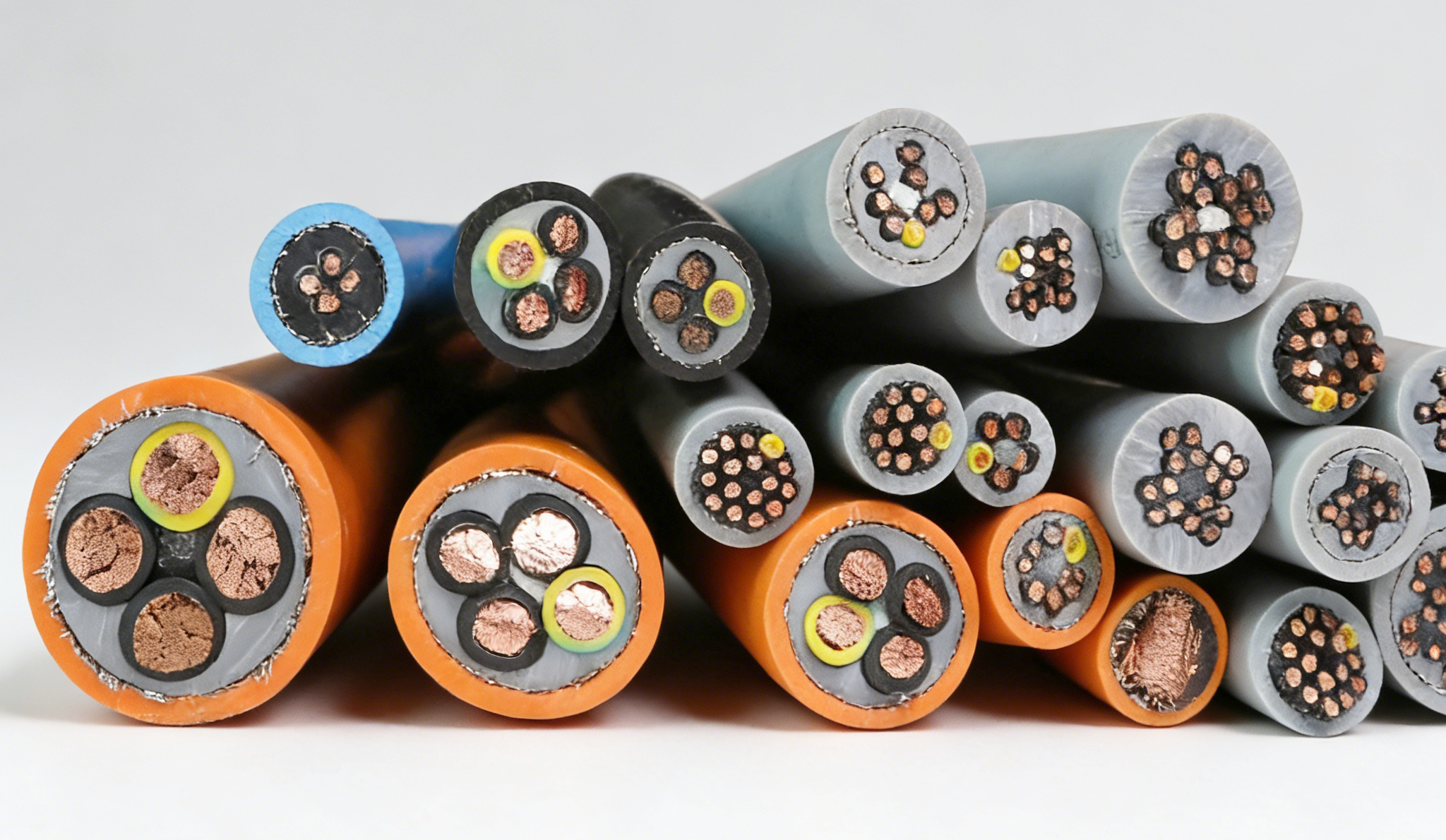
Modern factories depend on fast data exchange. Robots communicate. Sensors monitor machines. Control systems coordinate production lines. In these environments, Drag Chain Cable and Flexible Cable designs often integrate optical fiber to support stable data transmission during continuous motion.
Optical fiber transmits signals using light instead of electricity. This design reduces signal loss and avoids electromagnetic interference from motors or drives. It also supports high-speed communication over long distances. Because machines move constantly, engineers combine flexible copper conductors and optical fibers inside the same cable structure.
Typical hybrid industrial cables may include:
● power conductors for machine operation
● control wires for signal transmission
● optical fibers for high-speed communication
This combination allows equipment to move freely while maintaining reliable connectivity.
Industrial environments contain heavy electrical equipment. Motors, drives, and switching devices generate strong electromagnetic interference. Copper communication cables may suffer signal disturbance in these situations. Optical fiber solves this challenge because light signals remain stable even near powerful machinery.
Optical fiber communication offers several advantages in Drag Chain Cable and Flexible Cable systems:
● Strong interference resistance
It does not react to electromagnetic noise from industrial machines.
● High transmission capacity
It can carry large volumes of data between sensors, controllers, and monitoring systems.
● Long-distance signal stability
Data travels farther with minimal loss, making it suitable for large factories.These characteristics make optical fiber an essential technology for modern automated production systems.
Engineers select different fiber types depending on transmission distance and bandwidth requirements. Both single-mode and multi-mode fibers appear in industrial cable systems.
Common types include:
● OS1 fiber
A single-mode fiber designed mainly for indoor industrial communication. It supports medium-distance networks and stable signal transmission.
● OS2 fiber
Another single-mode fiber but optimized for longer distances. Large facilities and outdoor installations often use it.
● OM1 fiber
A multi-mode fiber with a larger core diameter. It appears mostly in older short-distance communication systems.
● OM2–OM5 fibers
These multi-mode fibers provide higher bandwidth and improved performance. Many modern automation networks prefer OM3 or OM4.
Fiber Type | Core Size | Typical Use |
OS1 | 9/125 μm | Indoor industrial networks |
OS2 | 9/125 μm | Long-distance factory communication |
OM1 | 62.5/125 μm | Short legacy systems |
OM2–OM5 | 50/125 μm | High-speed automation networks |
Choosing the correct fiber type improves communication reliability and ensures compatibility with industrial control systems.
When integrating fiber into Drag Chain Cable and Flexible Cable, engineers must choose between single-mode and multi-mode designs. Each option supports different communication requirements.
Single-mode fiber uses a small core. Light travels along a single path. This design reduces signal dispersion and allows longer transmission distances. It works well for large facilities or distributed production lines.
Multi-mode fiber has a larger core diameter. Multiple light paths travel through the fiber. This structure allows easier signal coupling and works well for shorter communication distances inside factories.
In dynamic motion cables, designers must also consider:
● bending radius tolerance
● protective fiber layers
● mechanical stress resistance
These factors ensure the optical fiber continues to perform reliably while the cable moves repeatedly.
Optical fiber technology helps modern factories handle increasing data traffic. Production lines now generate information from cameras, sensors, and monitoring systems. Reliable transmission becomes critical.
Optical fiber provides several key advantages in Drag Chain Cable and Flexible Cable systems:
● Very high bandwidth capacity for industrial communication networks
● Low signal attenuation even over long distances
● Strong resistance to electrical interference in harsh environments
Because of these features, many advanced automation systems integrate optical fiber directly into flexible motion cables. This approach allows machines to move freely while maintaining fast and reliable data communication.
Designing cables for moving machinery requires careful engineering. Optical fiber improves data transmission, yet it must survive constant motion. In Drag Chain Cable and Flexible Cable systems, engineers must balance flexibility, protection, and communication performance. Machines move repeatedly. Cables bend thousands of times. Good structural design keeps optical fibers stable while the cable moves.
Several design factors affect performance in dynamic cable systems:
● bending behavior during machine movement
● internal cable structure supporting fiber protection
● protective layers preventing mechanical damage
● environmental resistance against industrial conditions
Each element works together to maintain stable signal transmission in motion environments.
The bend radius determines how tightly a cable can curve without damaging internal components. In drag chain systems, cables follow a fixed motion path. If the bending radius becomes too small, the optical fiber may experience stress or signal loss.
Engineers design cables to control this movement carefully. Internal fillers help distribute stress. Flexible conductor structures reduce mechanical fatigue. These design methods allow cables to move smoothly inside carrier chains.
Key motion design considerations include:
● Controlled bending path
Cable carriers guide movement and keep bending consistent. This prevents sharp curves during operation.
● Stress distribution inside the cable core
Internal separators stabilize the structure. They prevent fibers from rubbing against conductors.
● Long cycle durability
Motion cables must tolerate millions of bending cycles in automation equipment.
These features help Drag Chain Cable and Flexible Cable systems maintain reliable communication while machines move continuously.
The internal structure of the optical fiber strongly influences flexibility. Two common structures appear in industrial cables: loose tube and tight buffered designs.
Loose tube construction places fibers inside a protective tube. The fiber can move slightly inside the tube. This reduces stress when the cable bends or vibrates. It works well in dynamic motion cables.
Tight buffered construction coats the fiber directly with protective material. This design improves handling and makes termination easier during installation. It is commonly used in indoor cable systems.
Fiber Structure | Structural Feature | Typical Application |
Loose Tube | Fiber moves inside protective tube | Motion cables and dynamic environments |
Tight Buffered | Fiber tightly coated with protection | Indoor or compact cable installations |
In many Drag Chain Cable and Flexible Cable designs, loose tube structures provide better flexibility during repeated motion.
Optical fibers require protection because they are more delicate than copper conductors. Motion cables therefore include multiple protective layers to ensure long-term reliability.
Typical reinforcement structures include:
● Strength members
Materials such as aramid yarn help the cable resist tensile forces during machine movement.
● Internal fillers
These components maintain cable shape and prevent internal friction between elements.
● Durable outer jackets
Jackets protect the cable from abrasion, oil exposure, and mechanical damage.
These structural layers allow optical fibers and electrical conductors to coexist safely in the same Drag Chain Cable and Flexible Cable system.
Industrial environments expose cables to demanding conditions. Machines generate heat. Oils and lubricants may contact the cable surface. Continuous motion also creates friction.
To maintain durability, motion cables must resist these environmental challenges:
● Temperature variation
Cable insulation must remain flexible in both hot and cold conditions.
● Oil and chemical exposure
Industrial fluids can degrade poor-quality materials. Oil-resistant jackets improve service life.
● Mechanical abrasion
Movement inside drag chains causes surface wear. Abrasion-resistant materials protect the cable structure.
Modern factories combine motion equipment and digital networks. Machines no longer move alone. They also send data continuously. Because of this shift, Drag Chain Cable and Flexible Cable designs often integrate optical fiber. These hybrid cables carry electrical power and high-speed signals at the same time. They also survive constant bending inside dynamic systems.
Many industries depend on these integrated cables:
● automated manufacturing plants
● robotics and smart assembly systems
● heavy material handling equipment
● large industrial communication networks
In each environment, cables must remain flexible while maintaining stable data transmission.
Robotic systems move constantly during production tasks. Arms rotate. Axes slide along tracks. Sensors communicate with controllers in real time. Because of this motion, cables inside robots must bend thousands of times during daily operation.
Hybrid Drag Chain Cable and Flexible Cable solutions solve this challenge. They combine copper conductors and optical fibers in one cable structure. Power reaches motors. Data flows between sensors and control systems.
Typical robotic communication tasks include:
● machine vision data transfer
● sensor monitoring signals
● robot motion control feedback
Important benefits in robotic environments include:
● stable communication during continuous movement
● reduced cable clutter in robotic arms
● improved reliability for automated production lines
These cables allow robots to move freely while maintaining precise communication with control systems.
CNC machine tools require high accuracy and stable signal transmission. Their motion systems operate along several axes. The control system constantly sends commands and receives position feedback. A reliable cable system becomes essential.
Integrated Drag Chain Cable and Flexible Cable designs support these requirements. They carry both control signals and high-speed data while moving along cable carriers.
Key cable requirements in CNC equipment include:
● smooth bending during axis movement
● stable signal transmission for control systems
● resistance to machine vibration and oil exposure
The following table shows typical cable requirements in motion-controlled machinery.
Application | Cable Function | Key Performance Requirement |
CNC machines | Power and signal transmission | Stable communication during axis movement |
Robotic arms | Hybrid power and data | High flexibility and bend durability |
Automated production lines | Control and monitoring signals | Reliable motion performance |
Modern factories operate as connected networks. Sensors collect data. Machines communicate across industrial networks. Control systems monitor production efficiency in real time. Optical fiber integration supports these high-speed communication demands.
In Drag Chain Cable and Flexible Cable systems, optical fiber provides several advantages:
● fast data transmission between machines
● resistance to electromagnetic interference from motors
● stable network communication across large production facilities
Smart manufacturing systems often include:
● automated inspection equipment
● industrial IoT sensors
● real-time monitoring platforms
Integrated motion cables allow these systems to function while machines continue moving during production cycles.
Large industrial equipment often operates in harsh environments. Cranes move across long distances. Reeling systems extend and retract cables repeatedly. Material handling machines operate in ports, steel plants, and logistics facilities.
These machines require cables capable of both mechanical durability and reliable communication. Integrated Drag Chain Cable and Flexible Cable designs meet these needs.
Important features in heavy-duty environments include:
● abrasion-resistant outer jackets protecting the cable surface
● high-strength reinforcement materials supporting long cable lengths
● stable data transmission for equipment monitoring systems
Typical heavy equipment using flexible motion cables includes:
● gantry cranes in ports
● cable reeling systems in industrial plants
● automated material transport equipment
Optical fiber improves communication in moving machines. Integrated Drag Chain Cable and Flexible Cable systems support both power and high-speed data. RONA develops reliable motion cables designed for durability, flexibility, and stable performance in demanding industrial environments.
A: Drag Chain Cable and Flexible Cable transmit power and data in moving machinery.
A: It improves data speed and avoids electromagnetic interference.
A: Flexible conductors and reinforced jackets reduce bending stress.
A: Yes, they support reliable communication in automated equipment.
A: Prices vary by structure, fiber type, and industrial requirements.


